--:--LAGOS
CultureMusicFilmTechSportsPoliticsHealthFinanceReligionFashion
health★ STRATA-AF™ ORIGINAL
Who Gets to Tell the Story of Congo's Ebola Outbreak

Between a CDC projection of 20,000 cases and a protest outside a US quarantine facility in Kenya, the outbreak's real center of gravity is the Congolese health workers holding the line in between.
Pan-African5 MIN · 3 JULY 2026
LISTEN TO STRATA-AF™ NOTE
Share
Who Gets to Tell the Story of Congo's Ebola Outbreak
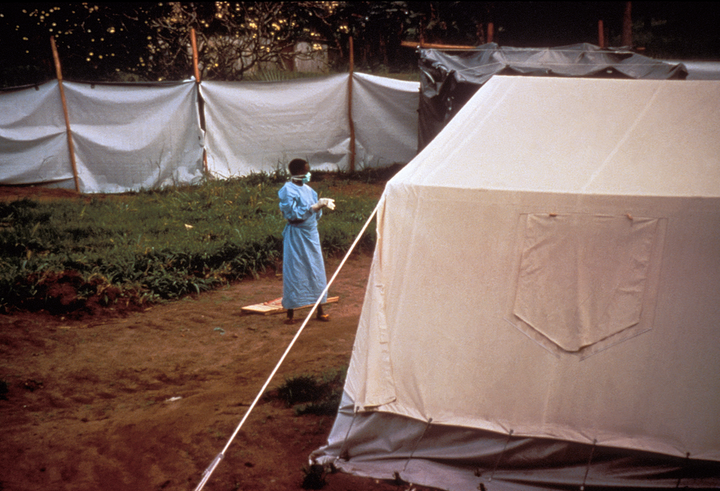
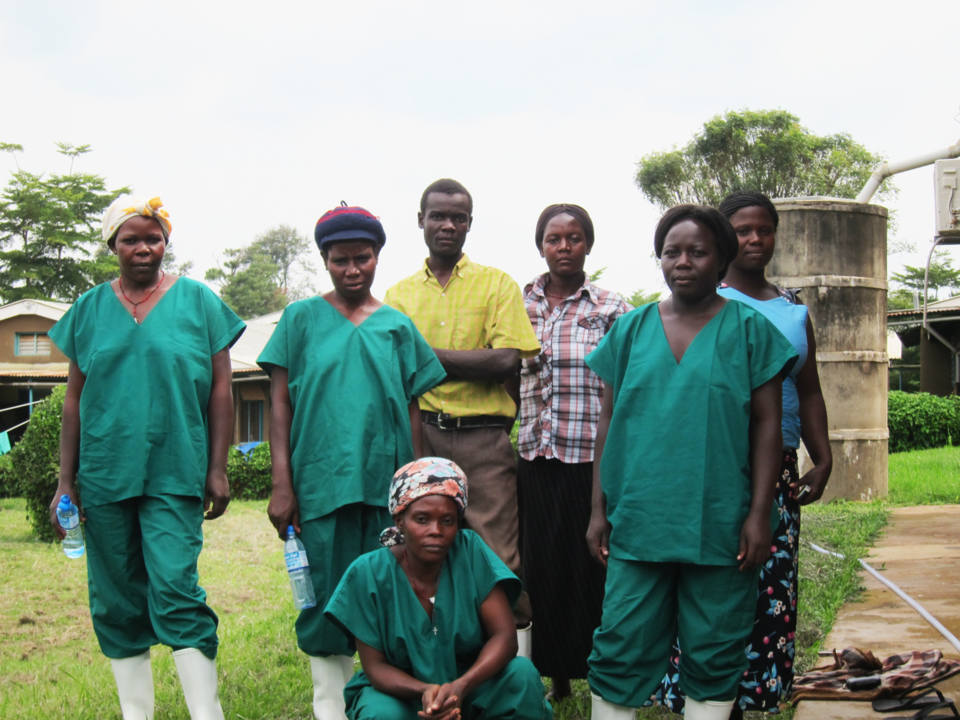
IMAGE · U.S. Centers for Disease Control · Public domain · Wikimedia Commons

Every Ebola outbreak in the Democratic Republic of Congo produces two overlapping stories. One is told in case counts and CDC projections, updated as international headlines. The other is told inside treatment centers and village meeting halls, where the outbreak is actually being fought. This time, the gap between the two has rarely been wider.

Start with the numbers, because they matter and because they've moved fast: confirmed cases have climbed to 515 with 91 deaths, concentrated heavily in Ituri province, a region already strained by conflict and weak state presence long before this outbreak began. The CDC has since warned the total could exceed 20,000 cases if containment falters: a projection significantly less for its precision than for what it signals about how quickly this could spiral if the response infrastructure doesn't hold.

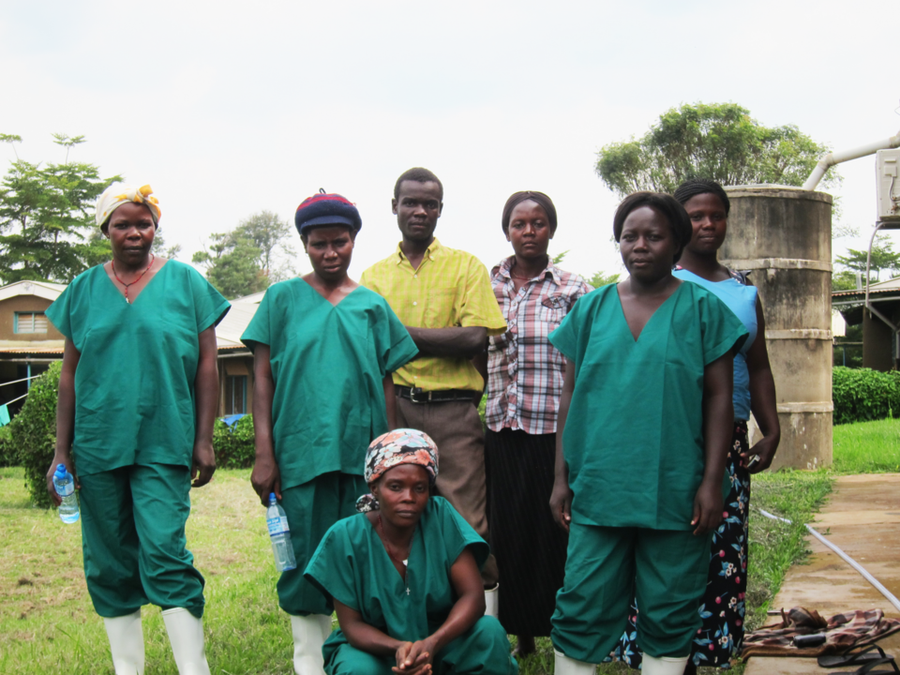
That infrastructure is not, primarily, an international one. Congolese health workers have been the ones administering the Bundibugyo strain's treatment protocols in the absence of an approved vaccine or therapeutic specific to this variant, using supportive care, isolation discipline, and clinical judgment built through repeated exposure to outbreaks this same region has weathered before. The absence of an approved treatment is a genuine gap in global pharmaceutical development priorities, but it has not stopped frontline teams from running a response with the tools they have.

Some of them have died doing it. Healthcare worker deaths on the frontline are not incidental to this outbreak's story: they are a direct measure of how thin protective infrastructure remains even for the people best trained to contain the disease. Every outbreak in this region reproduces the same brutal arithmetic: the health workers with the most institutional knowledge of how to fight Ebola are also the ones most exposed to dying from it, because protective equipment, staffing depth, and hazard compensation rarely scale with the risk being asked of them.

The Congolese government and WHO have reaffirmed joint commitment to protecting populations in Ituri and beyond, language that is necessary but, on its own, has been heard before in past outbreaks without always translating into durable investment once case counts eventually fall. What's more interesting is the quieter argument underneath the official statements: that international organizations often frame every DRC Ebola outbreak as a global emergency requiring external rescue, when the more accurate frame is that Congolese health workers have been managing recurring outbreaks in this exact region for over a decade, building a form of institutional expertise that outside actors arrive to supplement, not to supply from scratch.

STRATA-AF™

Keep reading this Original

Sign in or sign up to finish this story, get your personalised feed, and unlock every Strata-AF™ Original.

SIGN IN / SIGN UP
READ NEXT
‘Among the things he feared most was death’: the doctors and nurses dying on the Ebola frontline
HEALTHThe Guardian
‘Among the things he feared most was death’: the doctors and nurses dying on the Ebola frontline
4 MINREAD →
30-50% Death Rate: How Congo's Latest Ebola Outbreak Tests African Health Sovereignty
HEALTHSTRATA-AF™ ORIGINAL
30-50% Death Rate: How Congo's Latest Ebola Outbreak Tests African Health Sovereignty
Kinshasa, DR Congo2 MINREAD →
--:--LAGOS
STRATA-AF™
ISSUE 001FEED◎ SEARCHSUBSCRIBE
/shows/data/docs
health★ STRATA-AF™ ORIGINAL
Who Gets to Tell the Story of Congo's Ebola Outbreak
IMAGE · U.S. Centers for Disease Control · Public domain · Wikimedia Commons
Who Gets to Tell the Story of Congo's Ebola Outbreak

Between a CDC projection of 20,000 cases and a protest outside a US quarantine facility in Kenya, the outbreak's real center of gravity is the Congolese health workers holding the line in between.

Pan-African5 MIN READ · 3 JULY 2026
LISTEN TO STRATA-AF™ NOTE
Share

Every Ebola outbreak in the Democratic Republic of Congo produces two overlapping stories. One is told in case counts and CDC projections, updated as international headlines. The other is told inside treatment centers and village meeting halls, where the outbreak is actually being fought. This time, the gap between the two has rarely been wider.

Start with the numbers, because they matter and because they've moved fast: confirmed cases have climbed to 515 with 91 deaths, concentrated heavily in Ituri province, a region already strained by conflict and weak state presence long before this outbreak began. The CDC has since warned the total could exceed 20,000 cases if containment falters: a projection significantly less for its precision than for what it signals about how quickly this could spiral if the response infrastructure doesn't hold.

That infrastructure is not, primarily, an international one. Congolese health workers have been the ones administering the Bundibugyo strain's treatment protocols in the absence of an approved vaccine or therapeutic specific to this variant, using supportive care, isolation discipline, and clinical judgment built through repeated exposure to outbreaks this same region has weathered before. The absence of an approved treatment is a genuine gap in global pharmaceutical development priorities, but it has not stopped frontline teams from running a response with the tools they have.

Some of them have died doing it. Healthcare worker deaths on the frontline are not incidental to this outbreak's story: they are a direct measure of how thin protective infrastructure remains even for the people best trained to contain the disease. Every outbreak in this region reproduces the same brutal arithmetic: the health workers with the most institutional knowledge of how to fight Ebola are also the ones most exposed to dying from it, because protective equipment, staffing depth, and hazard compensation rarely scale with the risk being asked of them.

The Congolese government and WHO have reaffirmed joint commitment to protecting populations in Ituri and beyond, language that is necessary but, on its own, has been heard before in past outbreaks without always translating into durable investment once case counts eventually fall. What's more interesting is the quieter argument underneath the official statements: that international organizations often frame every DRC Ebola outbreak as a global emergency requiring external rescue, when the more accurate frame is that Congolese health workers have been managing recurring outbreaks in this exact region for over a decade, building a form of institutional expertise that outside actors arrive to supplement, not to supply from scratch.

STRATA-AF™

Keep reading this Original

Sign in or sign up to finish this story, get your personalised feed, and unlock every Strata-AF™ Original.

SIGN IN / SIGN UP
VERTICAL
health
ORIGIN
Pan-African
PUBLISHED
3 JULY 2026
READ NEXT2 PIECES SELECTED BY OUR EDITORS
HEALTH
‘Among the things he feared most was death’: the doctors and nurses dying on the Ebola frontline
Four hospital staff dead in as many days: the Guardian follows the Congolese doctors and nurses treating Ebola patients in conditions they describe as agonizing.
4 MINREAD →
HEALTH
30-50% Death Rate: How Congo's Latest Ebola Outbreak Tests African Health Sovereignty
As Ebola resurges in DRC with deadly force, the continent's response reveals growing tensions between local expertise and international intervention.
Kinshasa, DR Congo2 MINREAD →
CULTURE · MUSIC · FILM · TECH · SPORT · POLITICS · HEALTH · FINANCE · RELIGION · FASHION · LAGOS · NAIROBI · JOBURG · ACCRA · DATA JOURNALISM · ORIGINAL REPORTING · THE ACTUAL VERSION ·CULTURE · MUSIC · FILM · TECH · SPORT · POLITICS · HEALTH · FINANCE · RELIGION · FASHION · LAGOS · NAIROBI · JOBURG · ACCRA · DATA JOURNALISM · ORIGINAL REPORTING · THE ACTUAL VERSION ·
Premium editorial for a continent that's done waiting to be covered.

Not the export-market version. Not the diaspora version. The actual version — written by the people who live there.

Verticals
CultureMusicFilmTechSportsPolitics
HUBS
Strata-AF OriginalsDataDocsNewsletterArchiveShows
Company
AboutMissionManifestoLegal
REACH
10VERTICALS
6CONTENT TYPES
5CITIES
1STANDARD
© 2026 STRATA-AF™ · STRATA PUBLISHING CO LTD · LAGOS · JOBURG · NAIROBI · ACCRAPRIVACYTERMSCORRECTIONSMASTHEAD
 
 
--:--LAGOS
CultureMusicFilmTechSportsPoliticsHealthFinanceReligionFashion
Highlights
Strata-AF
Editor's Pick
From the web
SPORTSSTRATA-AF™STRATA-AF™ ORIGINAL
WAFCON 2026 Proved African Women's Football Is Ready. The Clubs Aren't.
2 MINREAD →
POLITICSSTRATA-AF™★ EDITOR'S PICK
The Lagos Cancellation Is Not About Tyla Really, Or Is It ?
Pan-African2 MINREAD →
MUSICSTRATA-AF™★ EDITOR'S PICK
Blood, Beats & Betrayal: How Family Killed P-Square
Nigeria2 MINREAD →
MUSICBY THE NUMBERSSTRATA-AF™ ORIGINAL
Where African Artists Earn, Lose, and Get Erased on Stream
Pan-African2 MINREAD →
HEALTHSTRATA-AF™★ EDITOR'S PICK
Uganda Held the Line on Ebola. Here's the Playbook Congo Needs Now
DR Congo2 MINREAD →
MUSICSTRATA-AF™STRATA-AF™ ORIGINAL
Music Is Starving in Sudan: How the RSF Silenced a Generation of Artists
Sudan2 MINREAD →
CULTURESTRATA-AF™★ EDITOR'S PICK
How BBNaija Rewired Nigerian Television And Everything Around It
Lagos, Pan-African2 MINREAD →
FASHIONSTRATA-AF™★ EDITOR'S PICK
Lagos Fashion Week's Green Push Is Either Africa's Best Bet or Its Greenest Greenwash
Pan-African2 MINREAD →
CULTURESTRATA-AF™★ EDITOR'S PICK
Dakar 2026 Is Africa's Olympic Moment
Senegal2 MINREAD →
SPORTSFROM THE WEB★ EDITOR'S PICK
Senegal set to make Olympic history with Dakar 2026 Youth Games
Dakar 2026 breaks a hosting monopoly that has excluded Africa from Olympic stewardship for over a century — the question is what institutional and economic legacy Senegal can extract from the moment.
Senegal1 MIN · Africanews · 25 JULREAD →
See all stories

The actual version — written by the people who live there.

10VERTICALS
6TYPES
5CITIES
1STANDARD
AboutMissionManifestoLegalOriginalsSubscribeArchiveShowsContributorsJobs
© 2026 STRATA-AF™ · STRATA PUBLISHING CO LTD · LAGOS · NAIROBI · JOBURG · ACCRA
 
 
--:--LAGOS
CultureMusicFilmTechSportsPoliticsHealthFinanceReligionFashion
health★ STRATA-AF™ ORIGINAL
Who Gets to Tell the Story of Congo's Ebola Outbreak

Between a CDC projection of 20,000 cases and a protest outside a US quarantine facility in Kenya, the outbreak's real center of gravity is the Congolese health workers holding the line in between.

Pan-African5 MIN · 3 JULY 2026
LISTEN TO STRATA-AF™ NOTE
Share
Who Gets to Tell the Story of Congo's Ebola Outbreak

Every Ebola outbreak in the Democratic Republic of Congo produces two overlapping stories. One is told in case counts and CDC projections, updated as international headlines. The other is told inside treatment centers and village meeting halls, where the outbreak is actually being fought. This time, the gap between the two has rarely been wider.

Start with the numbers, because they matter and because they've moved fast: confirmed cases have climbed to 515 with 91 deaths, concentrated heavily in Ituri province, a region already strained by conflict and weak state presence long before this outbreak began. The CDC has since warned the total could exceed 20,000 cases if containment falters: a projection significantly less for its precision than for what it signals about how quickly this could spiral if the response infrastructure doesn't hold.

That infrastructure is not, primarily, an international one. Congolese health workers have been the ones administering the Bundibugyo strain's treatment protocols in the absence of an approved vaccine or therapeutic specific to this variant, using supportive care, isolation discipline, and clinical judgment built through repeated exposure to outbreaks this same region has weathered before. The absence of an approved treatment is a genuine gap in global pharmaceutical development priorities, but it has not stopped frontline teams from running a response with the tools they have.

Some of them have died doing it. Healthcare worker deaths on the frontline are not incidental to this outbreak's story: they are a direct measure of how thin protective infrastructure remains even for the people best trained to contain the disease. Every outbreak in this region reproduces the same brutal arithmetic: the health workers with the most institutional knowledge of how to fight Ebola are also the ones most exposed to dying from it, because protective equipment, staffing depth, and hazard compensation rarely scale with the risk being asked of them.

The Congolese government and WHO have reaffirmed joint commitment to protecting populations in Ituri and beyond, language that is necessary but, on its own, has been heard before in past outbreaks without always translating into durable investment once case counts eventually fall. What's more interesting is the quieter argument underneath the official statements: that international organizations often frame every DRC Ebola outbreak as a global emergency requiring external rescue, when the more accurate frame is that Congolese health workers have been managing recurring outbreaks in this exact region for over a decade, building a form of institutional expertise that outside actors arrive to supplement, not to supply from scratch.

STRATA-AF™

Keep reading this Original

Sign in or sign up to finish this story, get your personalised feed, and unlock every Strata-AF™ Original.

SIGN IN / SIGN UP
READ NEXT
--:--LAGOS
/shows/data/docs
health★ STRATA-AF™ ORIGINAL
Who Gets to Tell the Story of Congo's Ebola Outbreak
IMAGE · U.S. Centers for Disease Control · Public domain · Wikimedia Commons
Who Gets to Tell the Story of Congo's Ebola Outbreak

Between a CDC projection of 20,000 cases and a protest outside a US quarantine facility in Kenya, the outbreak's real center of gravity is the Congolese health workers holding the line in between.

Pan-African5 MIN READ · 3 JULY 2026
LISTEN TO STRATA-AF™ NOTE
Share

Every Ebola outbreak in the Democratic Republic of Congo produces two overlapping stories. One is told in case counts and CDC projections, updated as international headlines. The other is told inside treatment centers and village meeting halls, where the outbreak is actually being fought. This time, the gap between the two has rarely been wider.

Start with the numbers, because they matter and because they've moved fast: confirmed cases have climbed to 515 with 91 deaths, concentrated heavily in Ituri province, a region already strained by conflict and weak state presence long before this outbreak began. The CDC has since warned the total could exceed 20,000 cases if containment falters: a projection significantly less for its precision than for what it signals about how quickly this could spiral if the response infrastructure doesn't hold.

That infrastructure is not, primarily, an international one. Congolese health workers have been the ones administering the Bundibugyo strain's treatment protocols in the absence of an approved vaccine or therapeutic specific to this variant, using supportive care, isolation discipline, and clinical judgment built through repeated exposure to outbreaks this same region has weathered before. The absence of an approved treatment is a genuine gap in global pharmaceutical development priorities, but it has not stopped frontline teams from running a response with the tools they have.

Some of them have died doing it. Healthcare worker deaths on the frontline are not incidental to this outbreak's story: they are a direct measure of how thin protective infrastructure remains even for the people best trained to contain the disease. Every outbreak in this region reproduces the same brutal arithmetic: the health workers with the most institutional knowledge of how to fight Ebola are also the ones most exposed to dying from it, because protective equipment, staffing depth, and hazard compensation rarely scale with the risk being asked of them.

The Congolese government and WHO have reaffirmed joint commitment to protecting populations in Ituri and beyond, language that is necessary but, on its own, has been heard before in past outbreaks without always translating into durable investment once case counts eventually fall. What's more interesting is the quieter argument underneath the official statements: that international organizations often frame every DRC Ebola outbreak as a global emergency requiring external rescue, when the more accurate frame is that Congolese health workers have been managing recurring outbreaks in this exact region for over a decade, building a form of institutional expertise that outside actors arrive to supplement, not to supply from scratch.

STRATA-AF™

Keep reading this Original

Sign in or sign up to finish this story, get your personalised feed, and unlock every Strata-AF™ Original.

SIGN IN / SIGN UP

VERTICAL
health
ORIGIN
Pan-African
PUBLISHED
3 JULY 2026
READ NEXT2 PIECES SELECTED BY OUR EDITORS
CULTURE · MUSIC · FILM · TECH · SPORT · POLITICS · HEALTH · FINANCE · RELIGION · FASHION · LAGOS · NAIROBI · JOBURG · ACCRA · DATA JOURNALISM · ORIGINAL REPORTING · THE ACTUAL VERSION ·CULTURE · MUSIC · FILM · TECH · SPORT · POLITICS · HEALTH · FINANCE · RELIGION · FASHION · LAGOS · NAIROBI · JOBURG · ACCRA · DATA JOURNALISM · ORIGINAL REPORTING · THE ACTUAL VERSION ·
Premium editorial for a continent that's done waiting to be covered.

Not the export-market version. Not the diaspora version. The actual version — written by the people who live there.

Verticals
CultureMusicFilmTechSportsPolitics
HUBS
Strata-AF OriginalsDataDocsNewsletterArchiveShows
Company
AboutMissionManifestoLegal
REACH
10VERTICALS
6CONTENT TYPES
5CITIES
1STANDARD
© 2026 STRATA-AF™ · STRATA PUBLISHING CO LTD · LAGOS · JOBURG · NAIROBI · ACCRAPRIVACYTERMSCORRECTIONSMASTHEAD