Uganda's containment of Ebola isn't geography or good fortune — it's a replicable institutional system. As DRC's outbreak surges toward the second largest on record, the continent can't afford to treat Kampala's playbook as a footnote.
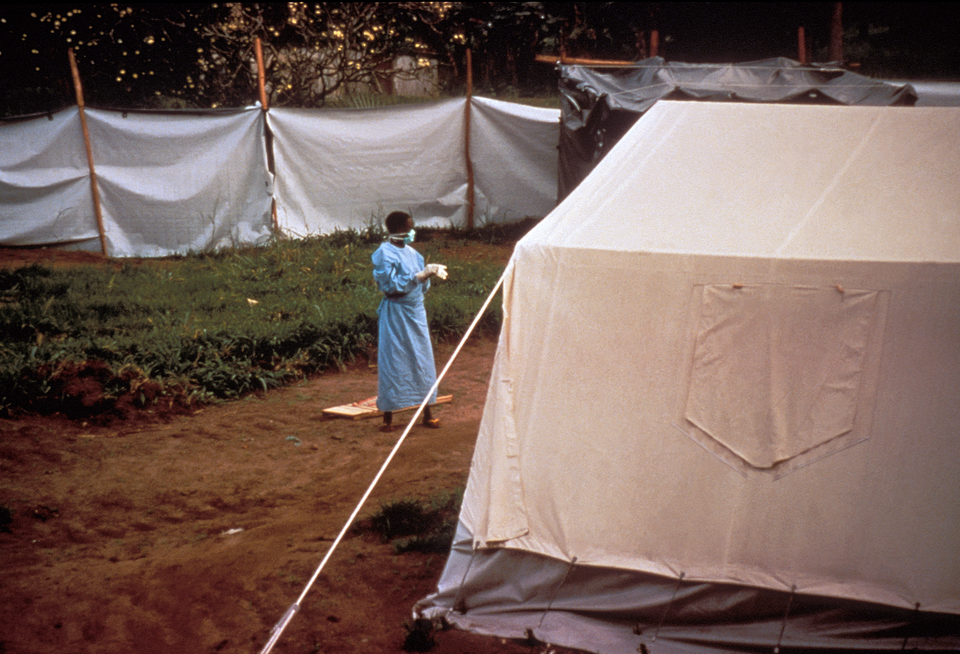
There is a border between Uganda and the Democratic Republic of Congo that is, at this moment, both physically closed and analytically revealing [1][3]. On one side, an outbreak that has compressed years of historical Ebola spread into weeks, now tracking toward the second-largest in recorded history [6]. On the other, a country that has confirmed new cases, shut its crossings, and is still by every epidemiological measure — winning [5].
The question worth asking is not why DRC is losing. The question is what Uganda built that DRC hasn't, and whether that gap can be closed fast enough to matter. Start with the numbers, because they tell an uncomfortable story. DRC's current outbreak has not simply grown; it has accelerated in a way that exposes a structural breakdown in containment capacity, not just a bad run of transmission chains [6]. Uganda, meanwhile, confirmed two new cases sometimes last week and responded not with panic but with protocol [2]. That asymmetry, same pathogen, region, radically different institutional outcomes is the central thread here, and it deserves more than a passing reference in a news brief.
The Bundibugyo Ebola strain driving the current crisis is not new to this corridor [1]. Uganda has met it before. That prior exposure matters, but not in the way the proximity based contagion assumptions most analysts reach for would suggest [5]. Shared borders do not produce shared readiness. What Uganda has built over successive outbreak responses going back to the early 2000s is a layered institutional architecture: rapid ring vaccination capacity, community level trust networks and cross border surveillance protocols that activate before cases are confirmed, not after [5][4]. These are not improvised responses. They are drilled, institutionalised and critically domestically owned.
The community trust dimension is the piece that international health commentary consistently underweights, because it resists the logistical frameworks that donors and agencies prefer to fund. Red Cross workers in DRC's Ituri province have said it plainly: community outreach is the decisive variable in stopping this outbreak [2]. Not vaccine supply alone, not treatment centres. Outreach — the kind that requires years of investment in local health workers who speak the right languages, understand the right burial customs and have earned the right to be believed when they arrive at a door.
Uganda has that infrastructure. In the affected zones of eastern DRC, it remains fractured by years of conflict, displacement and institutional mistrust that no emergency deployment can quickly repair [6][2].
Keep reading this Original
Sign in or sign up to finish this story, get your personalised feed, and unlock every Strata-AF™ Original.
SIGN IN / SIGN UP