Temwa Chawinga lit up the continent, Cameroon won without standard qualification, and Angola is only now launching its first women's league.
Here is the thread WAFCON 2026 left hanging in the air, the one the celebrations and the highlight reels conveniently skipped over: the best women's football on the African continent is currently being performed by players whose development was funded, housed, and coached largely outside of Africa. The tournament was a showcase. It was not, by any honest reading, evidence that the ecosystem supporting that talent is functional.
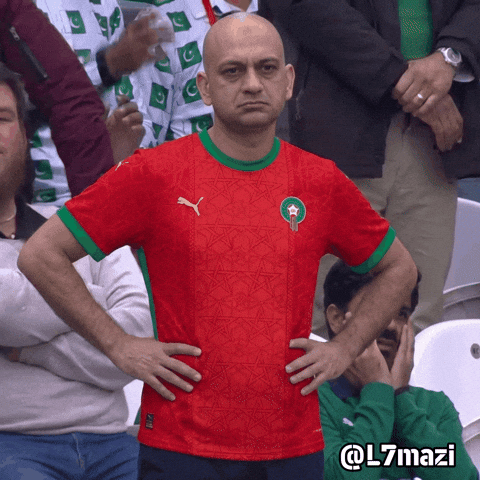
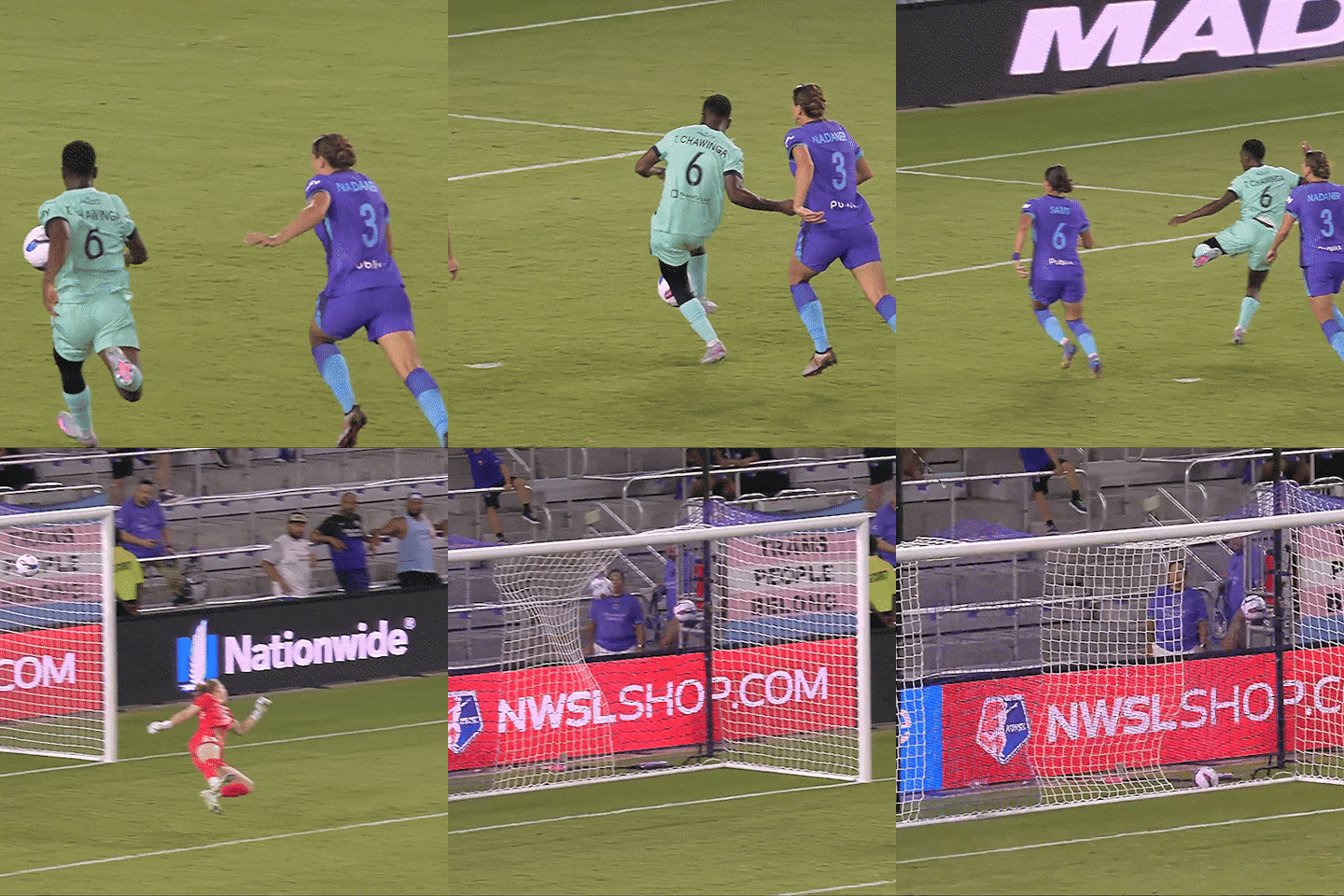
Start with Temwa Chawinga. Five goals. The Golden Boot. Malawi — a country that most continental football conversations treat as a footnote — suddenly positioned as a genuine force in the southern African women's game [1]. That narrative is worth celebrating, genuinely. But Chawinga does not play club football in Malawi. She plays in the United States, for Kansas City Current in the NWSL, where the infrastructure, the coaching depth, the sports science, and the weekly competitive pressure produced the player who showed up and dominated WAFCON 2026 [1]. Malawi benefited from the output. It did not produce the conditions.
This is not an argument against Chawinga or against Malawian football pride. It is an argument about attribution — about who and what actually built these players, and whether the post-tournament conversation is being honest about that ledger.
Cameroon won the tournament [3]. They did so, notably, without going through standard qualification — a structural anomaly that the tournament's own architecture permitted, and one that raises quiet but serious questions about whether WAFCON's competitive framework is rigorous enough to actually pressure-test development across the continent [3]. A host nation bypassing qualification is not unique to Africa, but in a context where the tournament is simultaneously being used as evidence of the continent's rising standards, it is a detail worth holding. The triumph is real. The asterisk is real too.
What WAFCON 2026 actually exposed, if you read the results and the surrounding context together, is a two-tier system operating inside a single tournament. There are nations producing elite individual talent — often through diaspora pathways or foreign club systems — and there are nations still building the foundational domestic infrastructure that might one day sustain that talent locally. The tournament puts both tiers on the same pitch and calls it parity. It is not parity. It is a continent at different speeds, sharing a trophy lift.
Keep reading this Original
Sign in or sign up to finish this story, get your personalised feed, and unlock every Strata-AF™ Original.
SIGN IN / SIGN UP