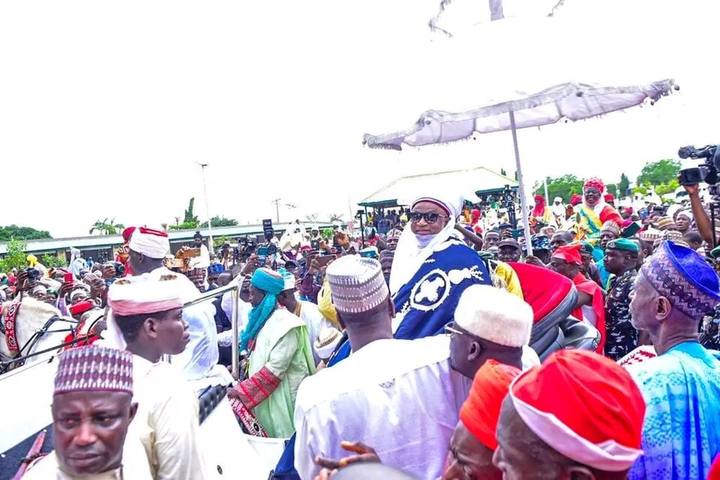
The continent sent its largest ever delegation to a World Cup and produced its most sustained knockout performances. Every single team still went home before the final. The gap is closing but closing is not the same as crossing.
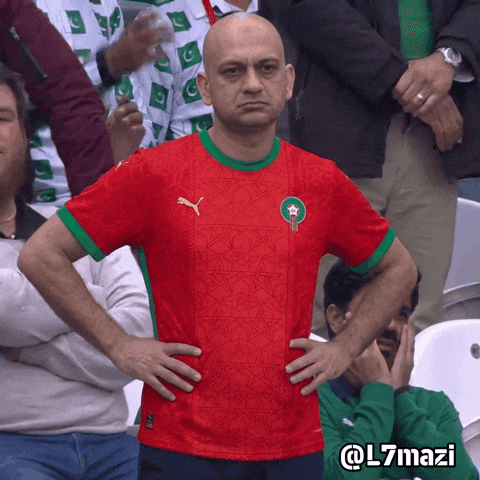
Here is the thread that connects every African exit at the 2026 World Cup, from the earliest group stage departures to the last team standing before the semi finals: the continent proved it can compete at this level, and then proved, again, that competing is a different verb from winning. Nine teams, a historic allocation and when the dust settled on the knockout rounds, not one African nation was in the final four. This is not a catastrophe, it is, however, a reckoning that deserves more than the usual post tournament eulogies about potential and promise.
Start with the structural achievement, because it is real and it matters. Africa's expanded nine team presence at the 2026 edition, a direct consequence of FIFA's 48-team format and sustained CAF lobbying was the most significant administrative victory African football has won at the global level [1]. More games meant more exposure for squads from Cape Verde to Senegal, more broadcast minutes, more data points. Cape Verde, one of the tournament's compelling underdog stories, made it further than any model projected, their compact defensive shape and transition game exposing the gap between FIFA ranking and actual tournament readiness in other confederations [1]. That story deserves to be told without caveat.
But caveats accumulate when you look at the full picture. Africa's nine teams collectively struggled to convert possession and pressure into goals in the moments that mattered most. The pattern is not new. It is, by 2026, almost a structural feature: African sides that are excellent at disrupting opponents, physically formidable, tactically coherent for sixty or seventy minutes, and then vulnerable at the margins: the penalty shootout, the set piece conceded in extra time, the moment when tournament management becomes the deciding variable. These are not talent problems. They are infrastructure problems wearing the costume of talent problems.
The Morocco France quarter final was the tournament's defining African moment, and it deserves its own paragraph because it was never purely a football match [2]. When the Atlas Lions faced Les Bleus, the weight in that fixture was colonial, generational, and existential in a way that no other matchup in the bracket carried. Morocco had already demonstrated, across two World Cup cycles, that they are not a romantic underdog story: they are a genuine footballing power, built on dual-nationality players who chose the continent over Europe, managed by a technical staff that out-prepares most of their opponents [2]. The scoreline, whatever it was, mattered less than the proof of concept: an African team forcing the world to take the fixture seriously as a football question, not an optics question [2]. That is new. That is not nothing.
Keep reading this Original
Sign in or sign up to finish this story, get your personalised feed, and unlock every Strata-AF™ Original.
SIGN IN / SIGN UP