--:--LAGOS
CultureMusicFilmTechSportsPoliticsHealthFinanceReligionFashion
culture★ STRATA-AF™ ORIGINAL
How BBNaija Rewired Nigerian Television And Everything Around It

Big Brother Nigeria didn't just change what Nigerians watched, it restructured who gets to be a celebrity, how brands spend, and what 'entertainment economy' even means on the continent.
Lagos, Pan-African2 MIN
LISTEN TO STRATA-AF™ NOTE
Share
How BBNaija Rewired Nigerian Television And Everything Around It
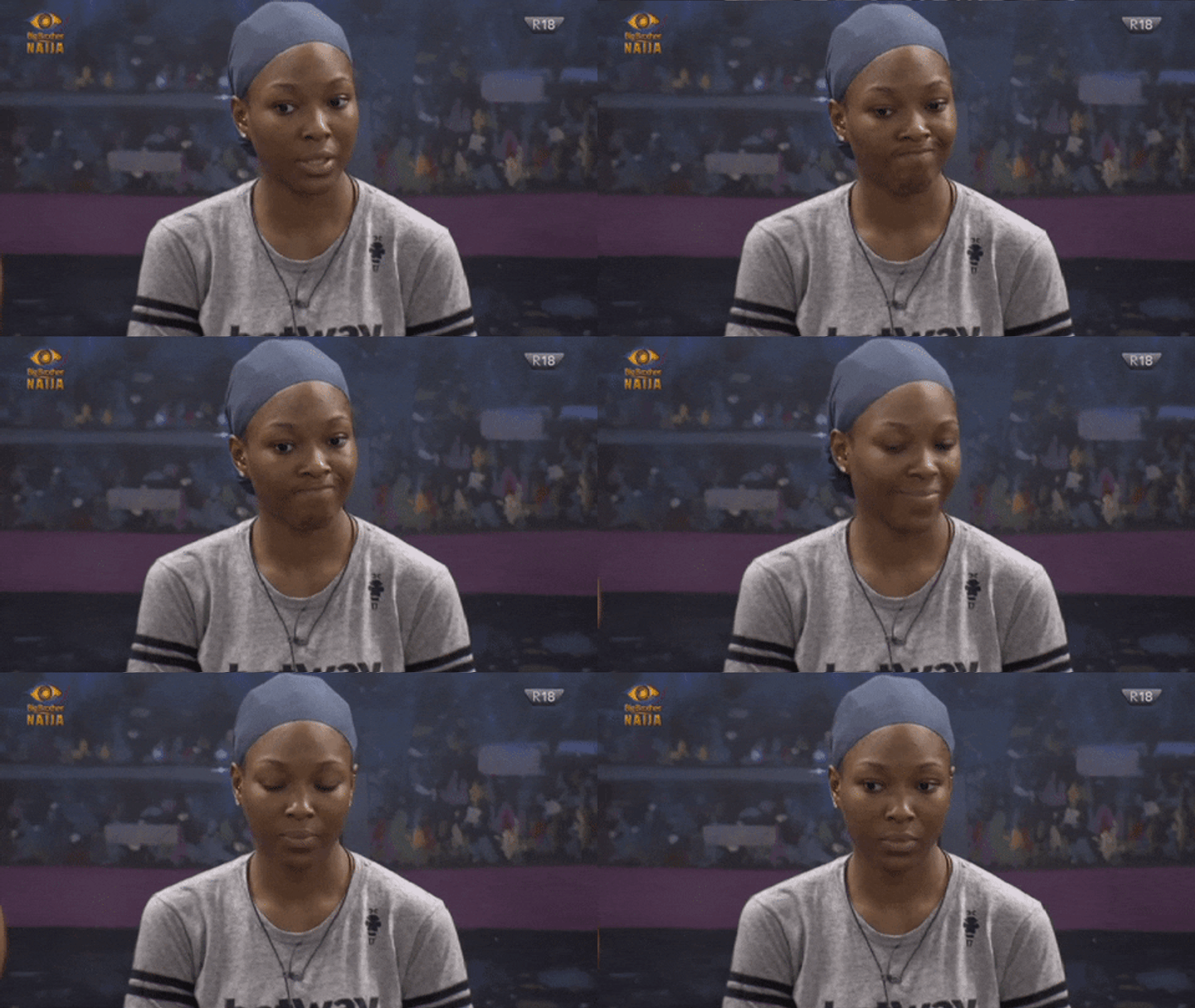
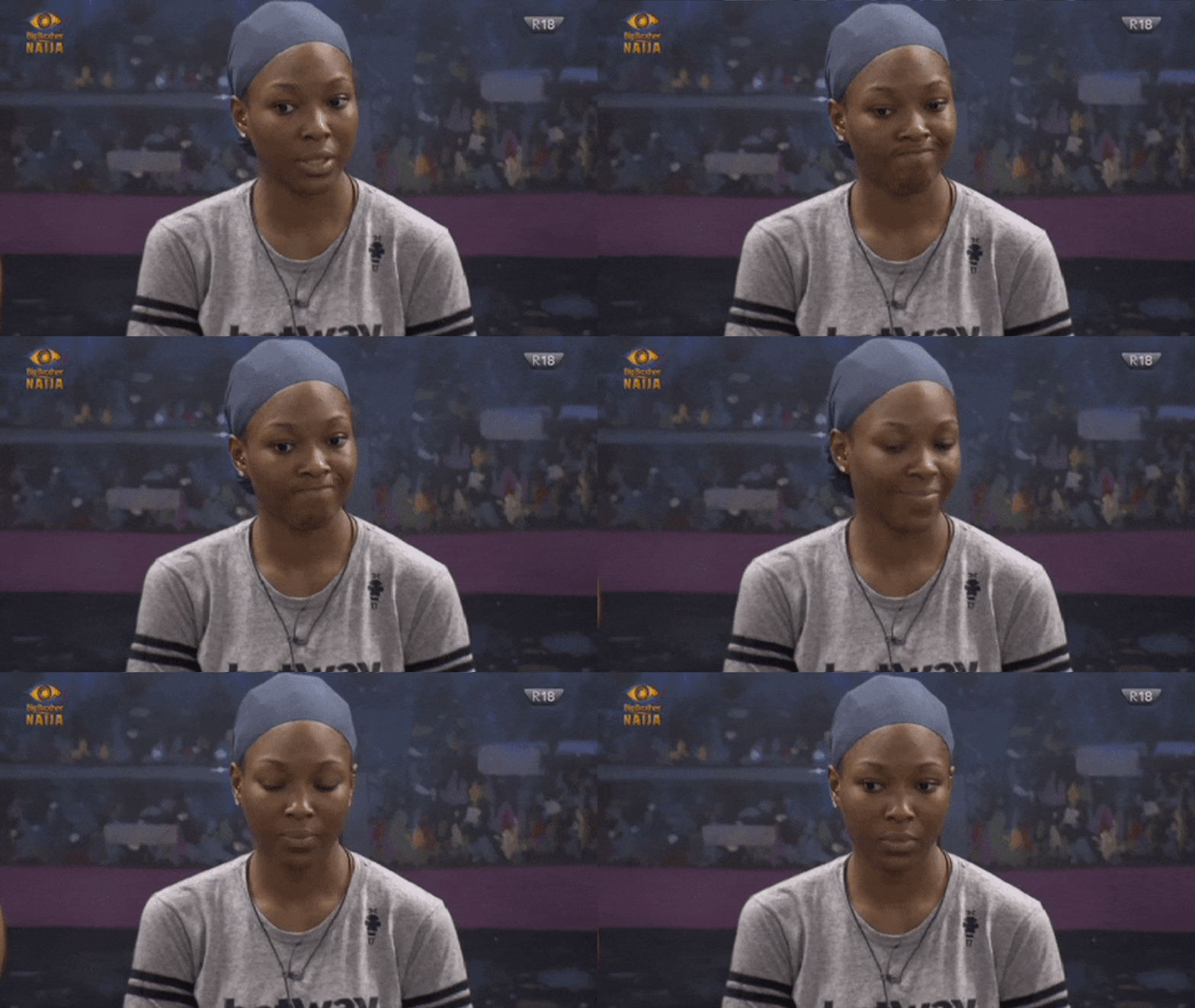
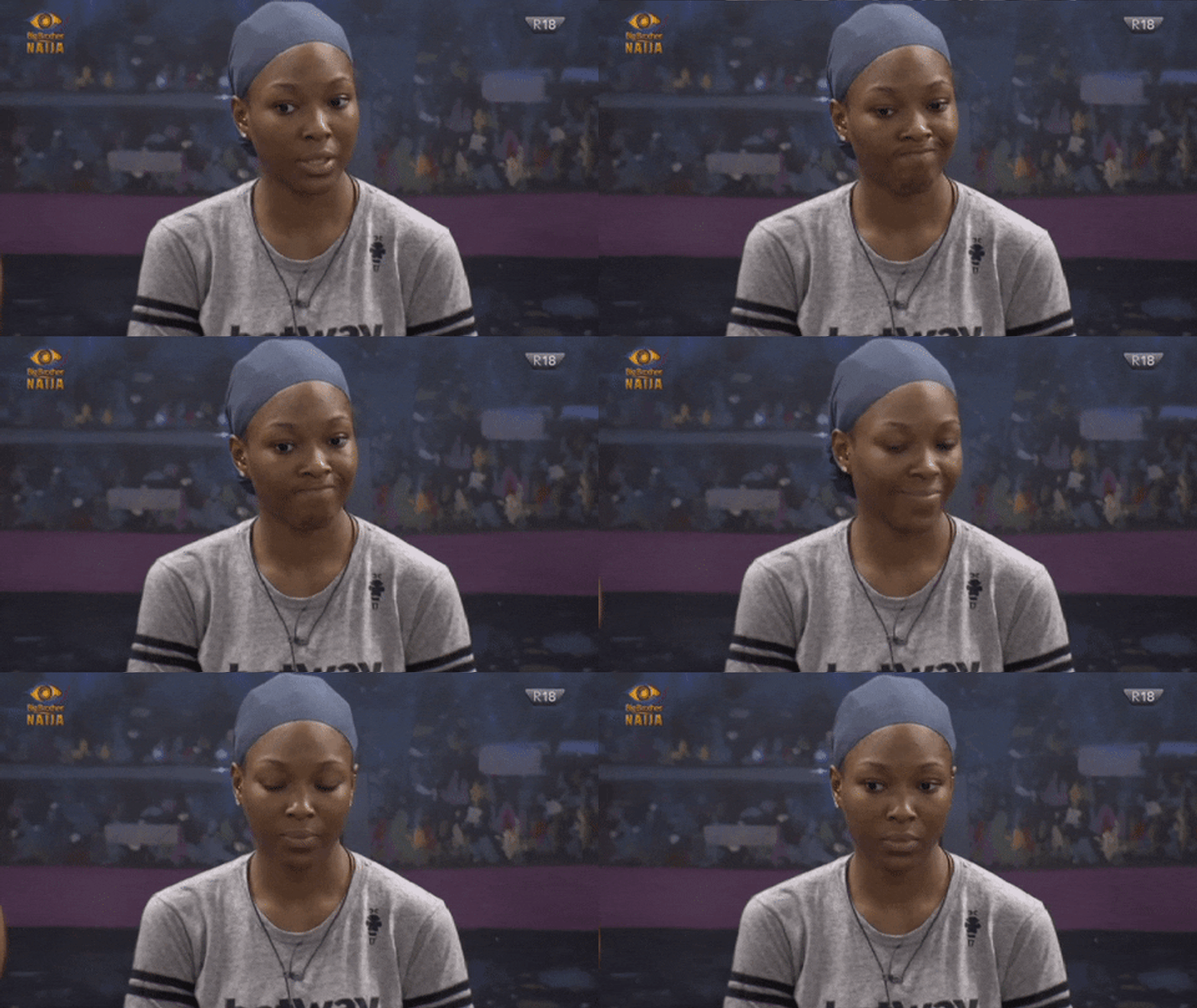
IMAGE · BigBrotherNaija · GIPHY

There is a moment every BBNaija season when the show stops being a reality competition and becomes something closer to a national event. Twitter trends lock in, office conversations pivot, pastors deliver opinions from the pulpit these moments are not an accident — it is the cumulative product of over a decade of deliberate audience conditioning, brand investment, and cultural negotiation.

To understand Nigerian television after BBNaija is to understand that the show did not simply occupy a slot in the schedule; it colonised the entire logic of how Nigerian entertainment produces, packages, and monetises attention.

When MultiChoice relaunched the format as Big Brother Naija in 2017 after a ten year hiatus, the timing was precise. Nigeria had a mobile first, data hungry youth demographic with nothing to aggregate around at scale [5]. Nollywood was thriving but episodic plus its stars were not built week by week in real time. Music had Afrobeats but fandom was dispersed across dozens of acts – BBNaija offered something architecturally different: a single, live, continuous feed that demanded daily emotional investment which demand had created a new audience behaviour that Nigerian television had never successfully manufactured before, an appointment viewing that was simultaneously social, digital, and participatory.

The participatory dimension is where everything changed. Voting was not a gimmick; it was the engine. When viewers could spend real airtime credits or data bundles to save a housemate, the show's economics fused with the audience's emotional stakes. MultiChoice reported hundreds of millions of votes across seasons, figures that spoke less to passive viewership and more to active financial participation [5]. Audiences were not just watching BBNaija, they were also funding it, directing it and arguing about it in a loop that kept the brand alive between episodes. This was a new grammar for Nigerian TV consumption, and it arrived before the global streaming platforms had fully calibrated their Africa strategies.

The celebrity pipeline that BBNaija constructed is perhaps its most lasting structural contribution. Before the show's return, Nigerian celebrity was produced primarily through music careers, Nollywood roles, or — infrequently — sports achievement. The path was long, gatekept and expensive.

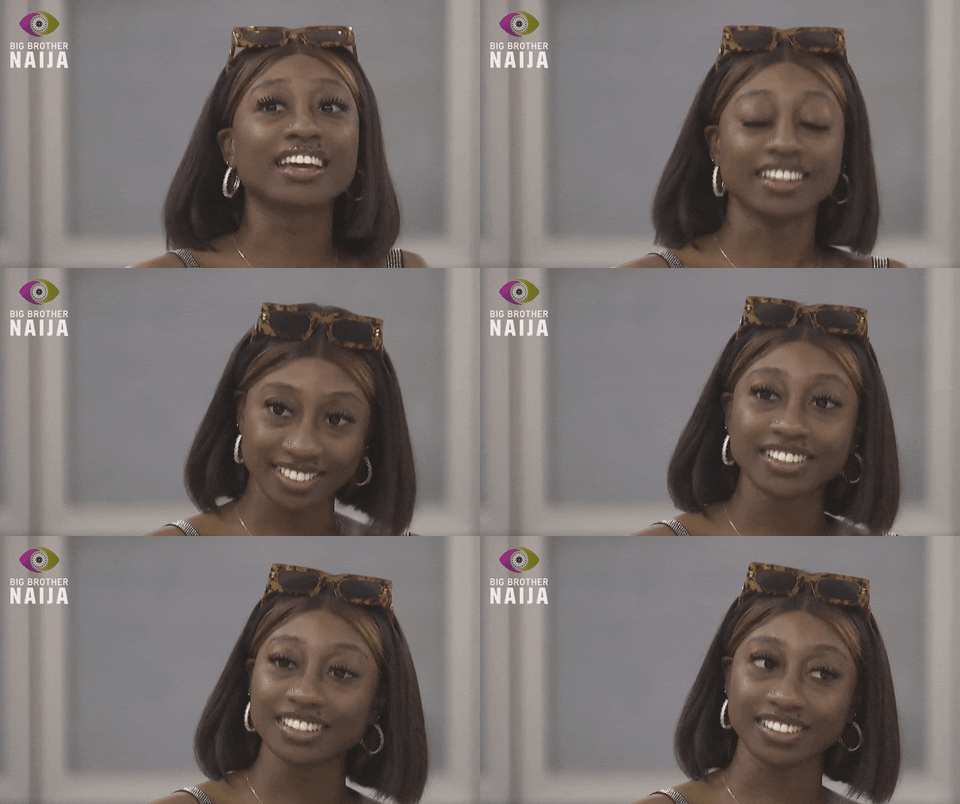
BBNaija short circuited all of that. Graduates of the house like Tobi Bakare, Ebuka Obi, Mercy Eke and Erica arrived on the other side of the finale with fandoms, endorsement inquiries and social followings that took traditional entertainers years to accumulate [5]. The show became a celebrity foundry operating on a three month cycle producing new faces faster than the industry's existing PR and management infrastructure could absorb them.

That speed created its own tensions. Nigerian entertainment's existing reward architecture — documented in how the industry evaluates and elevates its stars — has historically prized a particular kind of performed toughness, especially for male talent [5]. BBNaija complicated that calculus. The show rewards emotional expressiveness, vulnerability, interpersonal drama and the capacity to form genuine connections under surveillance. Housemates who cried, who admitted fear, who navigated romantic entanglements openly, sometimes polled better than those performing invulnerability.

STRATA-AF™

Keep reading this Original

Sign in or sign up to finish this story, get your personalised feed, and unlock every Strata-AF™ Original.

SIGN IN / SIGN UP
READ NEXT
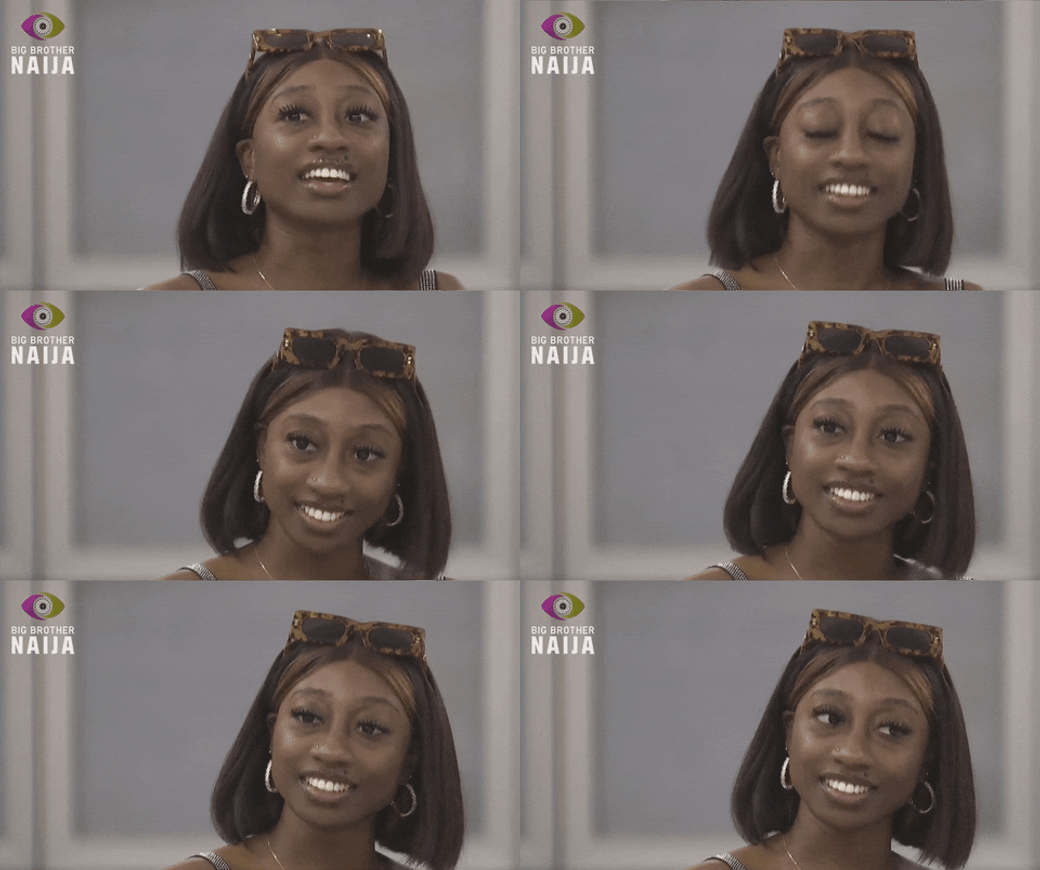
What BBNaija's Casting Actually Selects For
CULTUREYNaija
What BBNaija's Casting Actually Selects For
Nigeria3 MINREAD →
The Sovereignty Trap: Why Africa's Cultural Ascendance Masks a Deeper Crisis of Agency
CULTURESTRATA-AF™ ORIGINAL
The Sovereignty Trap: Why Africa's Cultural Ascendance Masks a Deeper Crisis of Agency
6 MINREAD →
--:--LAGOS
STRATA-AF™
ISSUE 001FEED◎ SEARCHSUBSCRIBE
/shows/data/docs
culture★ STRATA-AF™ ORIGINAL
How BBNaija Rewired Nigerian Television And Everything Around It
IMAGE · BigBrotherNaija · GIPHY
How BBNaija Rewired Nigerian Television And Everything Around It

Big Brother Nigeria didn't just change what Nigerians watched, it restructured who gets to be a celebrity, how brands spend, and what 'entertainment economy' even means on the continent.

Lagos, Pan-African2 MIN READ
LISTEN TO STRATA-AF™ NOTE
Share

There is a moment every BBNaija season when the show stops being a reality competition and becomes something closer to a national event. Twitter trends lock in, office conversations pivot, pastors deliver opinions from the pulpit these moments are not an accident — it is the cumulative product of over a decade of deliberate audience conditioning, brand investment, and cultural negotiation.

To understand Nigerian television after BBNaija is to understand that the show did not simply occupy a slot in the schedule; it colonised the entire logic of how Nigerian entertainment produces, packages, and monetises attention.

When MultiChoice relaunched the format as Big Brother Naija in 2017 after a ten year hiatus, the timing was precise. Nigeria had a mobile first, data hungry youth demographic with nothing to aggregate around at scale [5]. Nollywood was thriving but episodic plus its stars were not built week by week in real time. Music had Afrobeats but fandom was dispersed across dozens of acts – BBNaija offered something architecturally different: a single, live, continuous feed that demanded daily emotional investment which demand had created a new audience behaviour that Nigerian television had never successfully manufactured before, an appointment viewing that was simultaneously social, digital, and participatory.

The participatory dimension is where everything changed. Voting was not a gimmick; it was the engine. When viewers could spend real airtime credits or data bundles to save a housemate, the show's economics fused with the audience's emotional stakes. MultiChoice reported hundreds of millions of votes across seasons, figures that spoke less to passive viewership and more to active financial participation [5]. Audiences were not just watching BBNaija, they were also funding it, directing it and arguing about it in a loop that kept the brand alive between episodes. This was a new grammar for Nigerian TV consumption, and it arrived before the global streaming platforms had fully calibrated their Africa strategies.

The celebrity pipeline that BBNaija constructed is perhaps its most lasting structural contribution. Before the show's return, Nigerian celebrity was produced primarily through music careers, Nollywood roles, or — infrequently — sports achievement. The path was long, gatekept and expensive.

BBNaija short circuited all of that. Graduates of the house like Tobi Bakare, Ebuka Obi, Mercy Eke and Erica arrived on the other side of the finale with fandoms, endorsement inquiries and social followings that took traditional entertainers years to accumulate [5]. The show became a celebrity foundry operating on a three month cycle producing new faces faster than the industry's existing PR and management infrastructure could absorb them.

That speed created its own tensions. Nigerian entertainment's existing reward architecture — documented in how the industry evaluates and elevates its stars — has historically prized a particular kind of performed toughness, especially for male talent [5]. BBNaija complicated that calculus. The show rewards emotional expressiveness, vulnerability, interpersonal drama and the capacity to form genuine connections under surveillance. Housemates who cried, who admitted fear, who navigated romantic entanglements openly, sometimes polled better than those performing invulnerability.

STRATA-AF™

Keep reading this Original

Sign in or sign up to finish this story, get your personalised feed, and unlock every Strata-AF™ Original.

SIGN IN / SIGN UP
VERTICAL
culture
ORIGIN
Lagos, Pan-African
READ NEXT2 PIECES SELECTED BY OUR EDITORS
CULTURE
What BBNaija's Casting Actually Selects For
Regional spread and social reach, weighed against whatever produces the clip.
Nigeria3 MINREAD →
CULTURE
The Sovereignty Trap: Why Africa's Cultural Ascendance Masks a Deeper Crisis of Agency
From Davido's activism to Nairobi's protests, Lagos, Dakar, and Kigali's rising cultural reach is being undermined by continued dependence on external platforms, validation, and infrastructure.
6 MINREAD →
CULTURE · MUSIC · FILM · TECH · SPORT · POLITICS · HEALTH · FINANCE · RELIGION · FASHION · LAGOS · NAIROBI · JOBURG · ACCRA · DATA JOURNALISM · ORIGINAL REPORTING · THE ACTUAL VERSION ·CULTURE · MUSIC · FILM · TECH · SPORT · POLITICS · HEALTH · FINANCE · RELIGION · FASHION · LAGOS · NAIROBI · JOBURG · ACCRA · DATA JOURNALISM · ORIGINAL REPORTING · THE ACTUAL VERSION ·
Premium editorial for a continent that's done waiting to be covered.

Not the export-market version. Not the diaspora version. The actual version — written by the people who live there.

Verticals
CultureMusicFilmTechSportsPolitics
HUBS
Strata-AF OriginalsDataDocsNewsletterArchiveShows
Company
AboutMissionManifestoLegal
REACH
10VERTICALS
6CONTENT TYPES
5CITIES
1STANDARD
© 2026 STRATA-AF™ · STRATA PUBLISHING CO LTD · LAGOS · JOBURG · NAIROBI · ACCRAPRIVACYTERMSCORRECTIONSMASTHEAD
 
 
--:--LAGOS
CultureMusicFilmTechSportsPoliticsHealthFinanceReligionFashion
Highlights
Strata-AF
Editor's Pick
From the web
CULTURESTRATA-AF™★ EDITOR'S PICK
How BBNaija Rewired Nigerian Television And Everything Around It
Lagos, Pan-African2 MINREAD →
FASHIONSTRATA-AF™★ EDITOR'S PICK
Lagos Fashion Week's Green Push Is Either Africa's Best Bet or Its Greenest Greenwash
Pan-African2 MINREAD →
CULTURESTRATA-AF™★ EDITOR'S PICK
Sierra Leone's Weavers Are Building Export Value. Who Gets to Keep It?
Pan-African2 MINREAD →
SPORTSSTRATA-AF™★ EDITOR'S PICK
The Tournament That Will Define African Women's Football For a Generation
Pan-African2 MINREAD →
SPORTSSTRATA-AF™★ EDITOR'S PICK
The Junta Trio Wants to Host AFCON 2032. That Should Trouble Everyone.
Pan-African2 MINREAD →
FINANCESTRATA-AF™STRATA-AF™ ORIGINAL
How African Family Fortunes Vanish in One Generation
Pan-AfricanREAD →
HEALTHSTRATA-AF™STRATA-AF™ ORIGINAL
$3.3B Funding Gap: When Donor Fatigue Meets Africa's Deadliest Disease
Pan-African2 MINREAD →
CULTURESTRATA-AF™★ EDITOR'S PICK
The Three African Cities Quietly Splitting Africa's Cultural Centre of Gravity
Pan-African2 MINREAD →
FASHIONFROM THE WEB
African Designer Imane Ayissi Redefines Luxury On Paris Haute Couture Stage
Imane Ayissi's continued sole presence on the Paris haute couture calendar is less a triumph than an indictment African luxury craft remains a curiosity rather than a category, applauded yet structurally isolated from the industry's real capital flows.
CM1 MIN · AllAfrica Arts · 20 JUL
TECHFROM THE WEB★ EDITOR'S PICK
Uber to Acquire Glovo Across 50 Markets, Including Kenya, in Sh1.95tn Deal
Uber's $15 bn swallow of Delivery Hero's Glovo network is less a food delivery story than a logistics landgrab — whoever owns last mile infrastructure in Nairobi today owns the supply chain of East Africa tomorrow.
Kenya1 MIN · AllAfrica Latest · 18 JULREAD →
See all stories

The actual version — written by the people who live there.

10VERTICALS
6TYPES
5CITIES
1STANDARD
AboutMissionManifestoLegalOriginalsSubscribeArchiveShowsContributorsJobs
© 2026 STRATA-AF™ · STRATA PUBLISHING CO LTD · LAGOS · NAIROBI · JOBURG · ACCRA
 
 
--:--LAGOS
CultureMusicFilmTechSportsPoliticsHealthFinanceReligionFashion
culture★ STRATA-AF™ ORIGINAL
How BBNaija Rewired Nigerian Television And Everything Around It

Big Brother Nigeria didn't just change what Nigerians watched, it restructured who gets to be a celebrity, how brands spend, and what 'entertainment economy' even means on the continent.

Lagos, Pan-African2 MIN
LISTEN TO STRATA-AF™ NOTE
Share
How BBNaija Rewired Nigerian Television And Everything Around It

There is a moment every BBNaija season when the show stops being a reality competition and becomes something closer to a national event. Twitter trends lock in, office conversations pivot, pastors deliver opinions from the pulpit these moments are not an accident — it is the cumulative product of over a decade of deliberate audience conditioning, brand investment, and cultural negotiation.

To understand Nigerian television after BBNaija is to understand that the show did not simply occupy a slot in the schedule; it colonised the entire logic of how Nigerian entertainment produces, packages, and monetises attention.

When MultiChoice relaunched the format as Big Brother Naija in 2017 after a ten year hiatus, the timing was precise. Nigeria had a mobile first, data hungry youth demographic with nothing to aggregate around at scale [5]. Nollywood was thriving but episodic plus its stars were not built week by week in real time. Music had Afrobeats but fandom was dispersed across dozens of acts – BBNaija offered something architecturally different: a single, live, continuous feed that demanded daily emotional investment which demand had created a new audience behaviour that Nigerian television had never successfully manufactured before, an appointment viewing that was simultaneously social, digital, and participatory.

The participatory dimension is where everything changed. Voting was not a gimmick; it was the engine. When viewers could spend real airtime credits or data bundles to save a housemate, the show's economics fused with the audience's emotional stakes. MultiChoice reported hundreds of millions of votes across seasons, figures that spoke less to passive viewership and more to active financial participation [5]. Audiences were not just watching BBNaija, they were also funding it, directing it and arguing about it in a loop that kept the brand alive between episodes. This was a new grammar for Nigerian TV consumption, and it arrived before the global streaming platforms had fully calibrated their Africa strategies.

The celebrity pipeline that BBNaija constructed is perhaps its most lasting structural contribution. Before the show's return, Nigerian celebrity was produced primarily through music careers, Nollywood roles, or — infrequently — sports achievement. The path was long, gatekept and expensive.

BBNaija short circuited all of that. Graduates of the house like Tobi Bakare, Ebuka Obi, Mercy Eke and Erica arrived on the other side of the finale with fandoms, endorsement inquiries and social followings that took traditional entertainers years to accumulate [5]. The show became a celebrity foundry operating on a three month cycle producing new faces faster than the industry's existing PR and management infrastructure could absorb them.

That speed created its own tensions. Nigerian entertainment's existing reward architecture — documented in how the industry evaluates and elevates its stars — has historically prized a particular kind of performed toughness, especially for male talent [5]. BBNaija complicated that calculus. The show rewards emotional expressiveness, vulnerability, interpersonal drama and the capacity to form genuine connections under surveillance. Housemates who cried, who admitted fear, who navigated romantic entanglements openly, sometimes polled better than those performing invulnerability.

STRATA-AF™

Keep reading this Original

Sign in or sign up to finish this story, get your personalised feed, and unlock every Strata-AF™ Original.

SIGN IN / SIGN UP
READ NEXT
--:--LAGOS
/shows/data/docs
culture★ STRATA-AF™ ORIGINAL
How BBNaija Rewired Nigerian Television And Everything Around It
IMAGE · BigBrotherNaija · GIPHY
How BBNaija Rewired Nigerian Television And Everything Around It

Big Brother Nigeria didn't just change what Nigerians watched, it restructured who gets to be a celebrity, how brands spend, and what 'entertainment economy' even means on the continent.

Lagos, Pan-African2 MIN READ
LISTEN TO STRATA-AF™ NOTE
Share

There is a moment every BBNaija season when the show stops being a reality competition and becomes something closer to a national event. Twitter trends lock in, office conversations pivot, pastors deliver opinions from the pulpit these moments are not an accident — it is the cumulative product of over a decade of deliberate audience conditioning, brand investment, and cultural negotiation.

To understand Nigerian television after BBNaija is to understand that the show did not simply occupy a slot in the schedule; it colonised the entire logic of how Nigerian entertainment produces, packages, and monetises attention.

When MultiChoice relaunched the format as Big Brother Naija in 2017 after a ten year hiatus, the timing was precise. Nigeria had a mobile first, data hungry youth demographic with nothing to aggregate around at scale [5]. Nollywood was thriving but episodic plus its stars were not built week by week in real time. Music had Afrobeats but fandom was dispersed across dozens of acts – BBNaija offered something architecturally different: a single, live, continuous feed that demanded daily emotional investment which demand had created a new audience behaviour that Nigerian television had never successfully manufactured before, an appointment viewing that was simultaneously social, digital, and participatory.

The participatory dimension is where everything changed. Voting was not a gimmick; it was the engine. When viewers could spend real airtime credits or data bundles to save a housemate, the show's economics fused with the audience's emotional stakes. MultiChoice reported hundreds of millions of votes across seasons, figures that spoke less to passive viewership and more to active financial participation [5]. Audiences were not just watching BBNaija, they were also funding it, directing it and arguing about it in a loop that kept the brand alive between episodes. This was a new grammar for Nigerian TV consumption, and it arrived before the global streaming platforms had fully calibrated their Africa strategies.

The celebrity pipeline that BBNaija constructed is perhaps its most lasting structural contribution. Before the show's return, Nigerian celebrity was produced primarily through music careers, Nollywood roles, or — infrequently — sports achievement. The path was long, gatekept and expensive.

BBNaija short circuited all of that. Graduates of the house like Tobi Bakare, Ebuka Obi, Mercy Eke and Erica arrived on the other side of the finale with fandoms, endorsement inquiries and social followings that took traditional entertainers years to accumulate [5]. The show became a celebrity foundry operating on a three month cycle producing new faces faster than the industry's existing PR and management infrastructure could absorb them.

That speed created its own tensions. Nigerian entertainment's existing reward architecture — documented in how the industry evaluates and elevates its stars — has historically prized a particular kind of performed toughness, especially for male talent [5]. BBNaija complicated that calculus. The show rewards emotional expressiveness, vulnerability, interpersonal drama and the capacity to form genuine connections under surveillance. Housemates who cried, who admitted fear, who navigated romantic entanglements openly, sometimes polled better than those performing invulnerability.

STRATA-AF™

Keep reading this Original

Sign in or sign up to finish this story, get your personalised feed, and unlock every Strata-AF™ Original.

SIGN IN / SIGN UP
VERTICAL
culture
ORIGIN
Lagos, Pan-African
READ NEXT2 PIECES SELECTED BY OUR EDITORS
CULTURE · MUSIC · FILM · TECH · SPORT · POLITICS · HEALTH · FINANCE · RELIGION · FASHION · LAGOS · NAIROBI · JOBURG · ACCRA · DATA JOURNALISM · ORIGINAL REPORTING · THE ACTUAL VERSION ·CULTURE · MUSIC · FILM · TECH · SPORT · POLITICS · HEALTH · FINANCE · RELIGION · FASHION · LAGOS · NAIROBI · JOBURG · ACCRA · DATA JOURNALISM · ORIGINAL REPORTING · THE ACTUAL VERSION ·
Premium editorial for a continent that's done waiting to be covered.

Not the export-market version. Not the diaspora version. The actual version — written by the people who live there.

Verticals
CultureMusicFilmTechSportsPolitics
HUBS
Strata-AF OriginalsDataDocsNewsletterArchiveShows
Company
AboutMissionManifestoLegal
REACH
10VERTICALS
6CONTENT TYPES
5CITIES
1STANDARD
© 2026 STRATA-AF™ · STRATA PUBLISHING CO LTD · LAGOS · JOBURG · NAIROBI · ACCRAPRIVACYTERMSCORRECTIONSMASTHEAD