--:--LAGOS
CultureMusicFilmTechSportsPoliticsHealthFinanceReligionFashion
culture★ STRATA-AF™ ORIGINAL
The Three African Cities Quietly Splitting Africa's Cultural Centre of Gravity

Lagos still gets the headlines, but the continent's real cultural infrastructure is being laid elsewhere — in summits, design schools, and financial frameworks that nobody's calling a movement yet.
Pan-African2 MIN
LISTEN TO STRATA-AF™ NOTE
Share
The Three African Cities Quietly Splitting Africa's Cultural Centre of Gravity
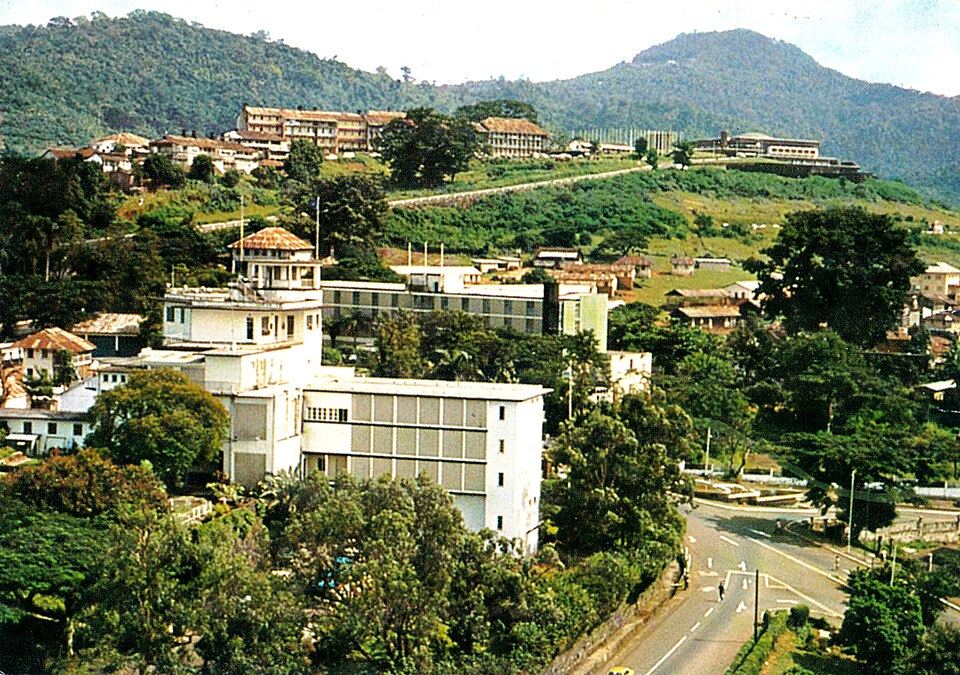
IMAGE · Brian Harrington Spier · CC BY-SA 2.0 · Wikimedia Commons

There is a particular kind of power that doesn't announce itself. It doesn't drop a single, it doesn't trend, it doesn't get profiled in a Western magazine as the 'next big thing.' It builds institutions. It trains cohorts. It convenes rooms where the conversation is about ownership rather than access. That is the power currently accumulating in Nairobi, Accra, and increasingly Freetown, and it is doing something Lagos, for all its velocity, has not yet managed to systematise: it is converting cultural energy into durable infrastructure.

The assumption has long been that African cultural capital runs through Lagos. The logic was defensible for a decade. Afrobeats became the continent's most exported genre, Nigerian designers colonised international runways, and Nollywood output dwarfed every competitor. But a gravitational centre is not permanent, it is a function of where investment, convening, and institution-building are happening at a given moment. Right now, the data points are clustering elsewhere.

Start with Nairobi. The Africa Soft Power Summit held there recently was not a festival or a trade fair, it was a structured intellectual convening around the question of African ownership of African value [1]. That framing matters. The continent's cultural economy has been characterised, for too long, by a split between creative abundance and structural dependency: artists generating enormous cultural output while the financial architecture capturing that value sits offshore. The Nairobi summit drew practitioners and policymakers into the same room and insisted the conversation be data driven and ownership centred, not aspirational [1]. That is a different kind of gathering than a showcase, and it produces different kinds of outcomes.

The financial context behind that conversation is not incidental. Tanzania's central bank has been accumulating gold reserves at a pace — 28 tonnes in 18 months that represents a serious state level bet against dollar dependency [2]. This matters for the cultural economy directly, because the extraction mechanisms embedded in that economy run on exactly the currency asymmetries Tanzania is trying to dismantle. African artists are billed in dollars by streaming platforms, paid out in devalued local currencies, and the spread between those two numbers is pocketed silently [3]. It is not a technical glitch; it is a structural feature of an industry designed without African financial sovereignty as a premise. The cities and countries beginning to build alternatives to that premise through reserve diversification, local currency frameworks, and ownership first convening are the ones laying the ground for a cultural economy that actually retains value on the continent [2][3].

STRATA-AF™

Keep reading this Original

Sign in or sign up to finish this story, get your personalised feed, and unlock every Strata-AF™ Original.

SIGN IN / SIGN UP
READ NEXT
The Sovereignty Trap: Why Africa's Cultural Ascendance Masks a Deeper Crisis of Agency
CULTURESTRATA-AF™ ORIGINAL
The Sovereignty Trap: Why Africa's Cultural Ascendance Masks a Deeper Crisis of Agency
Pan-African6 MINREAD →
Basha Uhuru Freedom Festival returns to mark youth month in Joburg
CULTUREMusic In Africa
Basha Uhuru Freedom Festival returns to mark youth month in Joburg
Johannesburg, South Africa2 MINREAD →
--:--LAGOS
STRATA-AF™
ISSUE 001FEED◎ SEARCHSUBSCRIBE
/shows/data/docs
culture★ STRATA-AF™ ORIGINAL
The Three African Cities Quietly Splitting Africa's Cultural Centre of Gravity
IMAGE · Brian Harrington Spier · CC BY-SA 2.0 · Wikimedia Commons
The Three African Cities Quietly Splitting Africa's Cultural Centre of Gravity

Lagos still gets the headlines, but the continent's real cultural infrastructure is being laid elsewhere — in summits, design schools, and financial frameworks that nobody's calling a movement yet.

Pan-African2 MIN READ
LISTEN TO STRATA-AF™ NOTE
Share

There is a particular kind of power that doesn't announce itself. It doesn't drop a single, it doesn't trend, it doesn't get profiled in a Western magazine as the 'next big thing.' It builds institutions. It trains cohorts. It convenes rooms where the conversation is about ownership rather than access. That is the power currently accumulating in Nairobi, Accra, and increasingly Freetown, and it is doing something Lagos, for all its velocity, has not yet managed to systematise: it is converting cultural energy into durable infrastructure.

The assumption has long been that African cultural capital runs through Lagos. The logic was defensible for a decade. Afrobeats became the continent's most exported genre, Nigerian designers colonised international runways, and Nollywood output dwarfed every competitor. But a gravitational centre is not permanent, it is a function of where investment, convening, and institution-building are happening at a given moment. Right now, the data points are clustering elsewhere.

Start with Nairobi. The Africa Soft Power Summit held there recently was not a festival or a trade fair, it was a structured intellectual convening around the question of African ownership of African value [1]. That framing matters. The continent's cultural economy has been characterised, for too long, by a split between creative abundance and structural dependency: artists generating enormous cultural output while the financial architecture capturing that value sits offshore. The Nairobi summit drew practitioners and policymakers into the same room and insisted the conversation be data driven and ownership centred, not aspirational [1]. That is a different kind of gathering than a showcase, and it produces different kinds of outcomes.

The financial context behind that conversation is not incidental. Tanzania's central bank has been accumulating gold reserves at a pace — 28 tonnes in 18 months that represents a serious state level bet against dollar dependency [2]. This matters for the cultural economy directly, because the extraction mechanisms embedded in that economy run on exactly the currency asymmetries Tanzania is trying to dismantle. African artists are billed in dollars by streaming platforms, paid out in devalued local currencies, and the spread between those two numbers is pocketed silently [3]. It is not a technical glitch; it is a structural feature of an industry designed without African financial sovereignty as a premise. The cities and countries beginning to build alternatives to that premise through reserve diversification, local currency frameworks, and ownership first convening are the ones laying the ground for a cultural economy that actually retains value on the continent [2][3].

STRATA-AF™

Keep reading this Original

Sign in or sign up to finish this story, get your personalised feed, and unlock every Strata-AF™ Original.

SIGN IN / SIGN UP
VERTICAL
culture
ORIGIN
Pan-African
READ NEXT2 PIECES SELECTED BY OUR EDITORS
CULTURE
The Sovereignty Trap: Why Africa's Cultural Ascendance Masks a Deeper Crisis of Agency
From Davido's activism to Nairobi's protests, Lagos, Dakar, and Kigali's rising cultural reach is being undermined by continued dependence on external platforms, validation, and infrastructure.
Pan-African6 MINREAD →
CULTURE
Basha Uhuru Freedom Festival returns to mark youth month in Joburg
Johannesburg's Constitution Hill hosts the 14th Basha Uhuru Freedom Festival this June, pairing youth activism with music, art and enterprise programming.
Johannesburg, South Africa2 MINREAD →
CULTURE · MUSIC · FILM · TECH · SPORT · POLITICS · HEALTH · FINANCE · RELIGION · FASHION · LAGOS · NAIROBI · JOBURG · ACCRA · DATA JOURNALISM · ORIGINAL REPORTING · THE ACTUAL VERSION ·CULTURE · MUSIC · FILM · TECH · SPORT · POLITICS · HEALTH · FINANCE · RELIGION · FASHION · LAGOS · NAIROBI · JOBURG · ACCRA · DATA JOURNALISM · ORIGINAL REPORTING · THE ACTUAL VERSION ·
Premium editorial for a continent that's done waiting to be covered.

Not the export-market version. Not the diaspora version. The actual version — written by the people who live there.

Verticals
CultureMusicFilmTechSportsPolitics
HUBS
Strata-AF OriginalsDataDocsNewsletterArchiveShows
Company
AboutMissionManifestoLegal
REACH
10VERTICALS
6CONTENT TYPES
5CITIES
1STANDARD
© 2026 STRATA-AF™ · STRATA PUBLISHING CO LTD · LAGOS · JOBURG · NAIROBI · ACCRAPRIVACYTERMSCORRECTIONSMASTHEAD
 
 
--:--LAGOS
CultureMusicFilmTechSportsPoliticsHealthFinanceReligionFashion
Highlights
Strata-AF
Editor's Pick
From the web
RELIGIONSTRATA-AF™STRATA-AF™ ORIGINAL
Niger State's Mosque Raids Expose a Response Gap
3 MINREAD →
HEALTHFROM THE WEB
Ebola Deaths in DRC Pass 2,000 at Day 100
A hundred days in, the DRC's Ebola outbreak has crossed 2,000 deaths, and the trajectory hasn't flattened.
DR Congo· The Guardian · 24 AUG
HEALTHFROM THE WEB
Unpaid Ebola Workers Strain DRC Outbreak Response
Health workers fighting the DRC's Ebola outbreak are reportedly going unpaid, even as officials describe the spread as exponential.
DR Congo· The Guardian · 24 AUG
RELIGIONFROM THE WEB
Niger State Still Can't Confirm Mosque Abduction Count
Four days after the mosque abductions, Niger State's government still can't say how many people were actually taken.
Nigeria1 MIN · AllAfrica · 24 AUG
RELIGIONFROM THE WEB
Villagers Describe Armed Raid During Niger Prayers
Witnesses in two Niger State villages describe an armed raid during Friday prayers, with police still confirming basic details days later.
Nigeria· DW · 24 AUG
CULTUREFROM THE WEB
Kenyan Social Entrepreneur Wins German Africa Prize
Wawira Njiru turned school-feeding logistics into a movement, and Germany just gave that work its biggest prize.
Kenya· DW · 24 AUG
SPORTSFROM THE WEB
Refugee Runner Amanal Petros Becomes European Champion
Amanal Petros ran from a war Germany didn't start and became one of its fastest citizens by choice, not birthright.
Ethiopia· DW · 24 AUG
CULTUREFROM THE WEB
Cameroon Marks 40 Years Since the Lake Nyos Gas Disaster
Four decades on, Lake Nyos still shapes how Cameroon's lake communities weigh the ground beneath them.
Cameroon· DW · 24 AUG
FINANCEFROM THE WEB
Congo-Brazzaville's Resource Wealth Still Skips Its People
Congo-Brazzaville sits on real mineral wealth, but the value keeps leaving before it reaches the people who live above it.
DR Congo· AllAfrica · 24 AUG
SPORTSFROM THE WEB
Egyptian Wrestler Loses Medal Over Mediterranean Games Assault
A silver medal became a disciplinary case the moment the match ended, not because of the result but the reaction to it.
Egypt· Egypt Independent · 24 AUG
See all stories

The actual version — written by the people who live there.

10VERTICALS
6TYPES
5CITIES
1STANDARD
AboutMissionManifestoLegalOriginalsSubscribeArchiveShowsContributorsJobs
© 2026 STRATA-AF™ · STRATA PUBLISHING CO LTD · LAGOS · NAIROBI · JOBURG · ACCRA
 
 
--:--LAGOS
CultureMusicFilmTechSportsPoliticsHealthFinanceReligionFashion
culture★ STRATA-AF™ ORIGINAL
The Three African Cities Quietly Splitting Africa's Cultural Centre of Gravity

Lagos still gets the headlines, but the continent's real cultural infrastructure is being laid elsewhere — in summits, design schools, and financial frameworks that nobody's calling a movement yet.

Pan-African2 MIN
LISTEN TO STRATA-AF™ NOTE
Share
The Three African Cities Quietly Splitting Africa's Cultural Centre of Gravity

There is a particular kind of power that doesn't announce itself. It doesn't drop a single, it doesn't trend, it doesn't get profiled in a Western magazine as the 'next big thing.' It builds institutions. It trains cohorts. It convenes rooms where the conversation is about ownership rather than access. That is the power currently accumulating in Nairobi, Accra, and increasingly Freetown, and it is doing something Lagos, for all its velocity, has not yet managed to systematise: it is converting cultural energy into durable infrastructure.

The assumption has long been that African cultural capital runs through Lagos. The logic was defensible for a decade. Afrobeats became the continent's most exported genre, Nigerian designers colonised international runways, and Nollywood output dwarfed every competitor. But a gravitational centre is not permanent, it is a function of where investment, convening, and institution-building are happening at a given moment. Right now, the data points are clustering elsewhere.

Start with Nairobi. The Africa Soft Power Summit held there recently was not a festival or a trade fair, it was a structured intellectual convening around the question of African ownership of African value [1]. That framing matters. The continent's cultural economy has been characterised, for too long, by a split between creative abundance and structural dependency: artists generating enormous cultural output while the financial architecture capturing that value sits offshore. The Nairobi summit drew practitioners and policymakers into the same room and insisted the conversation be data driven and ownership centred, not aspirational [1]. That is a different kind of gathering than a showcase, and it produces different kinds of outcomes.

The financial context behind that conversation is not incidental. Tanzania's central bank has been accumulating gold reserves at a pace — 28 tonnes in 18 months that represents a serious state level bet against dollar dependency [2]. This matters for the cultural economy directly, because the extraction mechanisms embedded in that economy run on exactly the currency asymmetries Tanzania is trying to dismantle. African artists are billed in dollars by streaming platforms, paid out in devalued local currencies, and the spread between those two numbers is pocketed silently [3]. It is not a technical glitch; it is a structural feature of an industry designed without African financial sovereignty as a premise. The cities and countries beginning to build alternatives to that premise through reserve diversification, local currency frameworks, and ownership first convening are the ones laying the ground for a cultural economy that actually retains value on the continent [2][3].

STRATA-AF™

Keep reading this Original

Sign in or sign up to finish this story, get your personalised feed, and unlock every Strata-AF™ Original.

SIGN IN / SIGN UP
READ NEXT
--:--LAGOS
/shows/data/docs
culture★ STRATA-AF™ ORIGINAL
The Three African Cities Quietly Splitting Africa's Cultural Centre of Gravity
IMAGE · Brian Harrington Spier · CC BY-SA 2.0 · Wikimedia Commons
The Three African Cities Quietly Splitting Africa's Cultural Centre of Gravity

Lagos still gets the headlines, but the continent's real cultural infrastructure is being laid elsewhere — in summits, design schools, and financial frameworks that nobody's calling a movement yet.

Pan-African2 MIN READ
LISTEN TO STRATA-AF™ NOTE
Share

There is a particular kind of power that doesn't announce itself. It doesn't drop a single, it doesn't trend, it doesn't get profiled in a Western magazine as the 'next big thing.' It builds institutions. It trains cohorts. It convenes rooms where the conversation is about ownership rather than access. That is the power currently accumulating in Nairobi, Accra, and increasingly Freetown, and it is doing something Lagos, for all its velocity, has not yet managed to systematise: it is converting cultural energy into durable infrastructure.

The assumption has long been that African cultural capital runs through Lagos. The logic was defensible for a decade. Afrobeats became the continent's most exported genre, Nigerian designers colonised international runways, and Nollywood output dwarfed every competitor. But a gravitational centre is not permanent, it is a function of where investment, convening, and institution-building are happening at a given moment. Right now, the data points are clustering elsewhere.

Start with Nairobi. The Africa Soft Power Summit held there recently was not a festival or a trade fair, it was a structured intellectual convening around the question of African ownership of African value [1]. That framing matters. The continent's cultural economy has been characterised, for too long, by a split between creative abundance and structural dependency: artists generating enormous cultural output while the financial architecture capturing that value sits offshore. The Nairobi summit drew practitioners and policymakers into the same room and insisted the conversation be data driven and ownership centred, not aspirational [1]. That is a different kind of gathering than a showcase, and it produces different kinds of outcomes.

The financial context behind that conversation is not incidental. Tanzania's central bank has been accumulating gold reserves at a pace — 28 tonnes in 18 months that represents a serious state level bet against dollar dependency [2]. This matters for the cultural economy directly, because the extraction mechanisms embedded in that economy run on exactly the currency asymmetries Tanzania is trying to dismantle. African artists are billed in dollars by streaming platforms, paid out in devalued local currencies, and the spread between those two numbers is pocketed silently [3]. It is not a technical glitch; it is a structural feature of an industry designed without African financial sovereignty as a premise. The cities and countries beginning to build alternatives to that premise through reserve diversification, local currency frameworks, and ownership first convening are the ones laying the ground for a cultural economy that actually retains value on the continent [2][3].

STRATA-AF™

Keep reading this Original

Sign in or sign up to finish this story, get your personalised feed, and unlock every Strata-AF™ Original.

SIGN IN / SIGN UP
VERTICAL
culture
ORIGIN
Pan-African
READ NEXT2 PIECES SELECTED BY OUR EDITORS
CULTURE · MUSIC · FILM · TECH · SPORT · POLITICS · HEALTH · FINANCE · RELIGION · FASHION · LAGOS · NAIROBI · JOBURG · ACCRA · DATA JOURNALISM · ORIGINAL REPORTING · THE ACTUAL VERSION ·CULTURE · MUSIC · FILM · TECH · SPORT · POLITICS · HEALTH · FINANCE · RELIGION · FASHION · LAGOS · NAIROBI · JOBURG · ACCRA · DATA JOURNALISM · ORIGINAL REPORTING · THE ACTUAL VERSION ·
Premium editorial for a continent that's done waiting to be covered.

Not the export-market version. Not the diaspora version. The actual version — written by the people who live there.

Verticals
CultureMusicFilmTechSportsPolitics
HUBS
Strata-AF OriginalsDataDocsNewsletterArchiveShows
Company
AboutMissionManifestoLegal
REACH
10VERTICALS
6CONTENT TYPES
5CITIES
1STANDARD
© 2026 STRATA-AF™ · STRATA PUBLISHING CO LTD · LAGOS · JOBURG · NAIROBI · ACCRAPRIVACYTERMSCORRECTIONSMASTHEAD