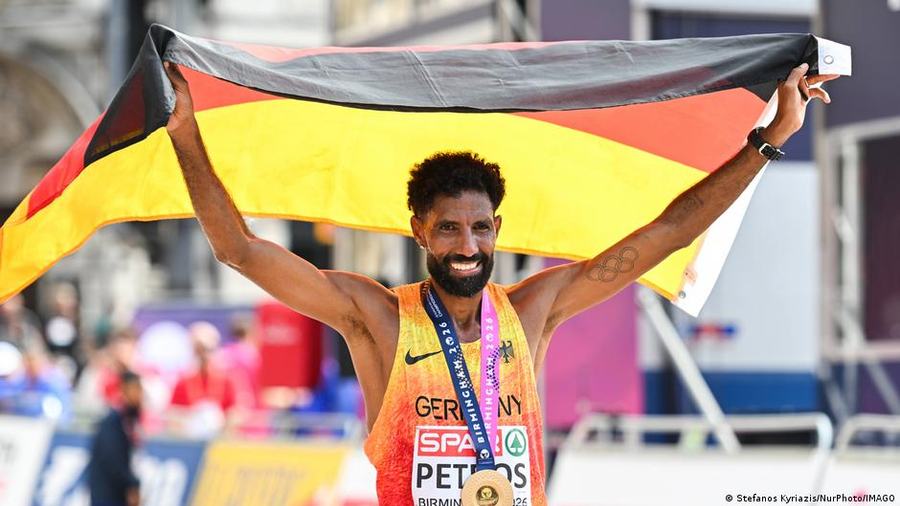
Amanal Petros ran from a war Germany didn't start and became one of its fastest citizens by choice, not birthright.
Amanal Petros fled the Eritrean–Ethiopian war and came to Germany as a teenager. Now one of the world's top marathon runners, he recently won gold at the European Athletics Championships.
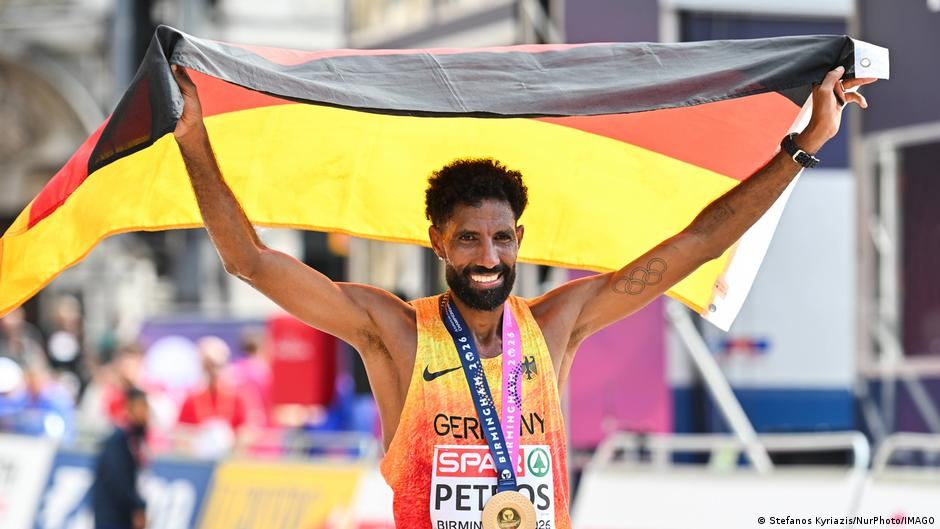
Eritrea's loss here is structural, not incidental: a talent pipeline that cannot retain its own runners because it cannot offer them a path to compete internationally is a story about state capacity, not one athlete's choice. Ethiopia and Eritrea both produce world-class distance runners at a rate few countries match; Petros's German gold is a reminder that talent was never the scarce resource in that pipeline. Keeping it was.
Amanal Petros fled the Eritrean-Ethiopian war as a teenager and arrived in Germany with nothing resembling an athletic career mapped out. He is now one of the world's top marathon runners, and his recent gold at the European championships makes him a European champion representing the country that took him in rather than the one he fled.
Petros's path runs against the usual framing of refugee athletes as exceptions who overcame their circumstances through individual will alone. His career also depended on Germany's sporting infrastructure recognising and developing his talent once he arrived, which is a less romantic but more replicable story than pure grit.
His result puts a name and a face on a debate that too often stays abstract: what integration actually looks like when it works, and how much of it depends on systems choosing to invest in people who arrived with nothing else.
READ THE SOURCE REPORT FROM DW →Enjoying Strata-AF™?
Sign in or sign up for a personalised feed and unlock Strata-AF™ Originals.