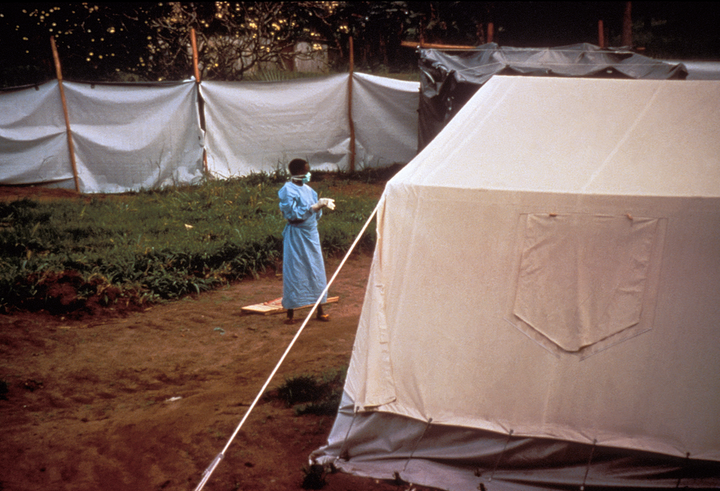
Hundreds of youths in Kenya’s central town of Nanyuki on Monday demonstrated against the establishment at the Laikipia Air Base of an Ebola quarantine center for American citizens exposed to the virus.

Kenya's youth are pushing back against a quarantine center built for American citizens on Kenyan soil, questioning why the burden of containment falls on African communities while the facility serves foreign nationals almost exclusively. Standard outbreak protocol does call for isolation facilities near the source of exposure, but the protesters' underlying question stands: whose health priorities get funded fastest, and why local capacity wasn't the first investment. This isn't xenophobia; it's a legitimate demand for reciprocity in how global health emergencies get resourced on African soil.
When Medical Apartheid Meets African Soil
The scenes unfolding in Nanyuki represent more than a local grievance against a quarantine facility. They expose the enduring architecture of medical colonialism that continues to position African nations as convenient laboratories and treatment centers for Western interests. The establishment of an Ebola quarantine center specifically for American citizens on Kenyan soil crystallizes a troubling paradigm where African countries provide the infrastructure and assume the risks while serving foreign populations who possess the economic and political capital to secure preferential treatment during health emergencies.
This arrangement illuminates the persistent inequalities that define global health governance, where African lives and African resources remain subordinated to Western priorities. While Kenyan citizens have historically struggled with inadequate healthcare infrastructure and limited access to advanced medical facilities, the rapid establishment of a specialized center for American nationals reveals how quickly resources can be mobilized when the beneficiaries possess the right passports. The protesters in Nanyuki are not simply expressing xenophobia; they are articulating a legitimate frustration with a system that consistently devalues African lives while expecting African nations to bear the costs and risks of serving foreign interests.
The irony runs deeper when one considers that Ebola outbreaks have predominantly ravaged African communities, yet the continent has rarely been the primary beneficiary of the advanced treatment facilities and resources that emerge during these health crises. Instead, African nations have often found themselves positioned as testing grounds for experimental treatments or as hosting sites for facilities that primarily serve non-African populations. This dynamic perpetuates a medical hierarchy that mirrors the extractive relationships that have long characterized Africa's engagement with Western powers.
The Nanyuki protests should be understood within the broader context of Africa's ongoing struggle for health sovereignty and self-determination. When young Kenyans take to the streets to challenge the establishment of medical facilities that exclude them, they are demanding recognition of their fundamental right to equitable healthcare and questioning why their country's resources should be deployed to serve foreign nationals while local health needs remain unmet. Their demonstration represents a rejection of the assumption that African nations exist to service Western convenience, even during public health emergencies.
The incident also highlights the urgent need for African nations to develop robust, continent-wide health infrastructure that serves African populations first and foremost. Rather than accepting arrangements that position them as junior partners in global health initiatives, African governments must prioritize building medical capacity that ensures their own citizens receive world-class care during health emergencies. The African Union and regional economic communities have a critical role to play in fostering this kind of health independence, moving beyond aid-dependent models toward sustainable, Africa-centered healthcare systems.
What the Nanyuki protests ultimately demand is a fundamental reimagining of how global health cooperation operates on African soil. True partnership requires reciprocity, respect, and the recognition that African nations are not merely convenient locations for Western medical infrastructure but sovereign entities whose primary obligation is to their own populations. Until this principle is acknowledged and institutionalized, scenes like those in Nanyuki will continue to erupt wherever medical colonialism attempts to masquerade as international cooperation.
READ THE SOURCE REPORT FROM AFRICANEWS →Enjoying Strata-AF™?
Sign in or sign up for a personalised feed and unlock Strata-AF™ Originals.