Nigeria's Senate has voted to double the statutory allocation to the Police Trust Fund, from 0.5% to 1% of federation revenue, aiming to boost funding and operational capacity.
The Senate has passed a bill seeking to increase the statutory allocation to the Nigeria Police Trust Fund (NPTF) from 0.5 per cent to 1 per cent of revenue accruing to the Federation Account, in a move aimed at strengthening police funding and improving operational capacity.
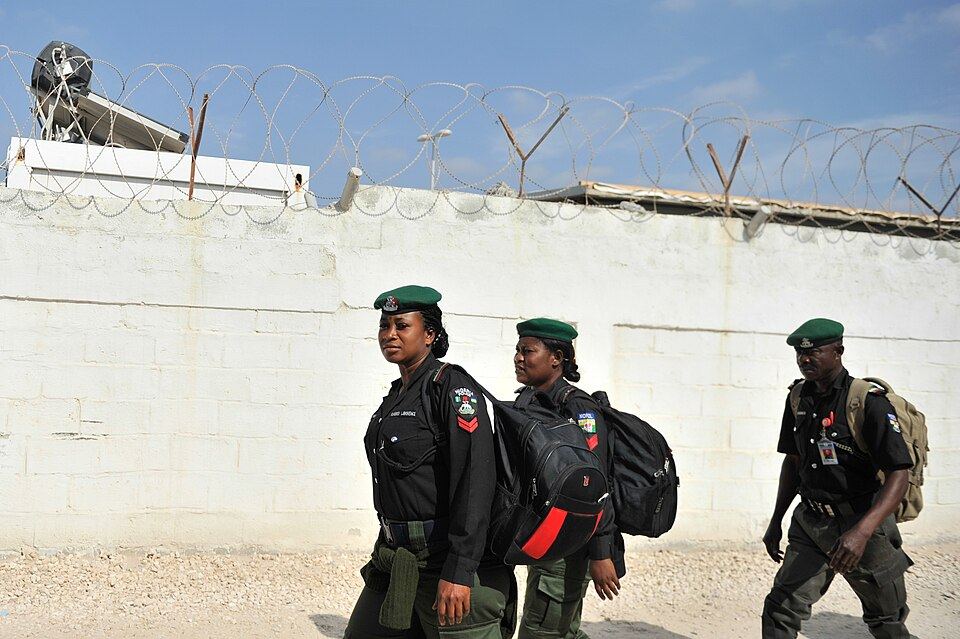
Nigeria's decision to double the Police Trust Fund allocation is fiscal acknowledgment of what Nigerians have long documented. That NPF dysfunction is partly a resource problem. The harder reform is not funding but accountability: more money directed at an institution with well-documented extortion patterns risks scaling both its capabilities and its worst behaviours unless accompanied by independent audit mechanisms that previous Nigerian security trust funds have failed to sustain.
The Nigerian Senate's passage of a bill doubling the Nigeria Police Trust Fund's statutory allocation from 0.5 to 1 percent of federation account revenue is a relatively modest fiscal measure that carries disproportionate political symbolism. For years, underfunding has been the single most cited structural explanation for the NPF's inability to modernise, insufficient vehicles, poor communications infrastructure, inadequate training budgets, and wages that make bribery economically rational for many officers. Doubling a percentage point of federation revenue doesn't solve these problems, but it does establish a new baseline and, more importantly, places the burden of explanation on any future administration that attempts to reduce it.
The timing matters. This bill arrives against the backdrop of the simultaneous passage of Tinubu's State Police Bill, a far more consequential restructuring of Nigeria's security architecture. The federal trust fund increase and the state police decentralisation are complementary moves: the first shores up central capacity while the second pushes operational authority to state-level institutions. Whether these two reforms will ultimately cohere or create jurisdictional confusion at the ground level depends on implementation timelines and the appetite of state governors to actually fund state police budgets rather than simply control them.
Nigeria's policing crisis is also a revenue crisis, a governance crisis, and a legitimacy crisis, all three simultaneously. Citizens in Lagos, Kano, Abuja, and Port Harcourt have documented experiences of police extortion that make increased funding a politically ambiguous proposition without accompanying accountability mechanisms. More money to an unreformed institution risks scaling its worst tendencies as well as its best capabilities.
The legislation's real test will be in how the additional funds are tracked, reported, and independently audited. Trust fund mechanisms have a mixed record in Nigeria across sectors, oil, education, infrastructure, because the governance architecture around them often lags the legislative ambition. The 1 percent figure is the easy part; building the accountability structure around it is where previous Nigerian reform efforts have repeatedly stalled.
READ THE SOURCE REPORT FROM ALLAFRICA →Enjoying Strata-AF™?
Sign in or sign up for a personalised feed and unlock Strata-AF™ Originals.