--:--LAGOS
CultureMusicFilmTechSportsPoliticsHealthFinanceReligionFashion
health
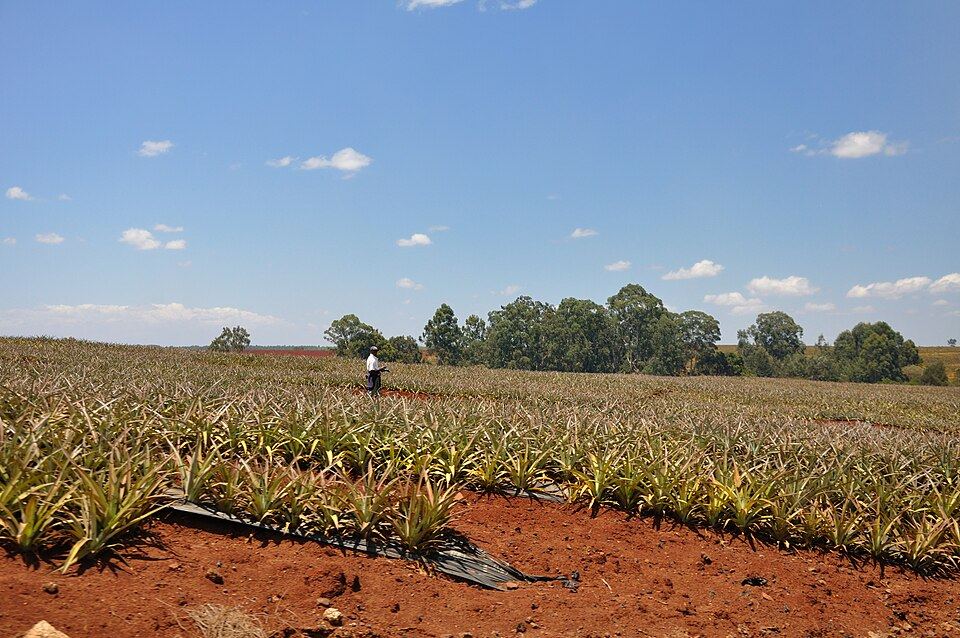
Kenya extends soil health improvements through regenerative agriculture programmes

Indian women fight back against toxic coal dust, the US hits a solar milestone, and there's good news for soil in Kenya and cars worldwide...
Kenya2 MIN · 25 JUNE 2026
From the web · DW
Kenya extends soil health improvements through regenerative agriculture programmes
IMAGE · Wikimedia Commons
STRATA-AF™ ANGLEEDITORIAL SYNTHESIS BY STRATA-AF™

The 'eco wins' format disaggregates what is structurally a single crisis, the uneven distribution of climate burden and climate response. Kenya's soil health progress represents genuine community-level resilience; what remains underreported is the structural investment gap that keeps such wins isolated rather than scalable across the continent's agricultural south.

The ecological wins indexed in this week's environmental round-up share a structural feature that matters for Africa specifically: they are all victories won by communities and institutions operating at the edges of their political and economic power. Indian women fighting coal dust through community monitoring, Kenya extending soil health improvements through regenerative agriculture programmes, the US crossing a solar production threshold, each of these is a data point in a longer argument about where climate progress actually comes from, and who builds it.

For Kenya, the soil health story is particularly significant. Sub-Saharan African agriculture operates on soils that have been systematically degraded by decades of input-dependent monoculture, deforestation pressure, and rainfall pattern disruption from climate change. Reversing that trajectory requires sustained investment in agroecological approaches that most donor frameworks have historically underweighted in favour of seed and fertiliser productivity programmes. The evidence base for soil restoration is now strong enough that this is no longer a fringe proposition. It's a question of resource allocation and political will at the national level.

Africa's environmental transitions, whether in clean cooking, soil restoration, off-grid solar, or urban waste management, tend to appear as individual "wins" in this framing while the systemic conditions that make them hard to scale remain underreported. The real story behind each of these weekly ecological wins is usually a coalition-building effort that took five to fifteen years of unglamorous work to produce a legible result.

The framing of climate progress as weekly good-news fragments carries its own politics: it disaggregates what is structurally a connected problem. Kenya's soil, the Indian coal community, and the US solar grid are all responding to the same underlying dynamic, the uneven distribution of climate burden and climate investment, but the wins-based format renders them episodic rather than systemic. Reading them together rather than in isolation is how the structural picture becomes visible.

READ THE SOURCE REPORT FROM DW

Enjoying Strata-AF™?

Sign in or sign up for a personalised feed and unlock Strata-AF™ Originals.

SIGN IN / SIGN UP
READ NEXT
African leaders sound alarm on impact of climate change and urbanisation
HEALTHAfricanews
African leaders sound alarm on impact of climate change and urbanisation
Pan-African1 MINREAD →
Better sleep, improved health, happier people: how ‘cool roofs’ could help millions avoid deadly heat
HEALTHThe Guardian
Better sleep, improved health, happier people: how ‘cool roofs’ could help millions avoid deadly heat
Cape Town, South Africa3 MINREAD →
--:--LAGOS
STRATA-AF™
ISSUE 001FEED◎ SEARCHSUBSCRIBE
/shows/data/docs
health
Kenya extends soil health improvements through regenerative agriculture programmes
IMAGE · Wikimedia Commons
Kenya extends soil health improvements through regenerative agriculture programmes

Indian women fight back against toxic coal dust, the US hits a solar milestone, and there's good news for soil in Kenya and cars worldwide...

Kenya2 MIN READ · 25 JUNE 2026
From the web · DW
STRATA-AF™ ANGLEEDITORIAL SYNTHESIS BY STRATA-AF™

The 'eco wins' format disaggregates what is structurally a single crisis, the uneven distribution of climate burden and climate response. Kenya's soil health progress represents genuine community-level resilience; what remains underreported is the structural investment gap that keeps such wins isolated rather than scalable across the continent's agricultural south.

The ecological wins indexed in this week's environmental round-up share a structural feature that matters for Africa specifically: they are all victories won by communities and institutions operating at the edges of their political and economic power. Indian women fighting coal dust through community monitoring, Kenya extending soil health improvements through regenerative agriculture programmes, the US crossing a solar production threshold, each of these is a data point in a longer argument about where climate progress actually comes from, and who builds it.

For Kenya, the soil health story is particularly significant. Sub-Saharan African agriculture operates on soils that have been systematically degraded by decades of input-dependent monoculture, deforestation pressure, and rainfall pattern disruption from climate change. Reversing that trajectory requires sustained investment in agroecological approaches that most donor frameworks have historically underweighted in favour of seed and fertiliser productivity programmes. The evidence base for soil restoration is now strong enough that this is no longer a fringe proposition. It's a question of resource allocation and political will at the national level.

Africa's environmental transitions, whether in clean cooking, soil restoration, off-grid solar, or urban waste management, tend to appear as individual "wins" in this framing while the systemic conditions that make them hard to scale remain underreported. The real story behind each of these weekly ecological wins is usually a coalition-building effort that took five to fifteen years of unglamorous work to produce a legible result.

The framing of climate progress as weekly good-news fragments carries its own politics: it disaggregates what is structurally a connected problem. Kenya's soil, the Indian coal community, and the US solar grid are all responding to the same underlying dynamic, the uneven distribution of climate burden and climate investment, but the wins-based format renders them episodic rather than systemic. Reading them together rather than in isolation is how the structural picture becomes visible.

READ THE SOURCE REPORT FROM DW

Enjoying Strata-AF™?

Sign in or sign up for a personalised feed and unlock Strata-AF™ Originals.

SIGN IN / SIGN UP
VERTICAL
health
ORIGIN
Kenya
PUBLISHED
25 JUNE 2026
READ NEXT2 PIECES SELECTED BY OUR EDITORS
HEALTH
African leaders sound alarm on impact of climate change and urbanisation
Speaking at the World Urban Forum in Baku, Azerbaijan, they said extreme weather events and rapid urbanisation are outpacing their ability to respond.
Pan-African1 MINREAD →
HEALTH
Better sleep, improved health, happier people: how ‘cool roofs’ could help millions avoid deadly heat
A reflective-paint pilot in a Western Cape township is turning down indoor temperatures for families like Sylvia's, whose children used to cry themselves to sleep in the summer heat.
Cape Town, South Africa3 MINREAD →
CULTURE · MUSIC · FILM · TECH · SPORT · POLITICS · HEALTH · FINANCE · RELIGION · FASHION · LAGOS · NAIROBI · JOBURG · ACCRA · DATA JOURNALISM · ORIGINAL REPORTING · THE ACTUAL VERSION ·CULTURE · MUSIC · FILM · TECH · SPORT · POLITICS · HEALTH · FINANCE · RELIGION · FASHION · LAGOS · NAIROBI · JOBURG · ACCRA · DATA JOURNALISM · ORIGINAL REPORTING · THE ACTUAL VERSION ·
Premium editorial for a continent that's done waiting to be covered.

Not the export-market version. Not the diaspora version. The actual version — written by the people who live there.

Verticals
CultureMusicFilmTechSportsPolitics
HUBS
Strata-AF OriginalsDataDocsNewsletterArchiveShows
Company
AboutMissionManifestoLegal
REACH
10VERTICALS
6CONTENT TYPES
5CITIES
1STANDARD
© 2026 STRATA-AF™ · STRATA PUBLISHING CO LTD · LAGOS · JOBURG · NAIROBI · ACCRAPRIVACYTERMSCORRECTIONSMASTHEAD
 
 
--:--LAGOS
CultureMusicFilmTechSportsPoliticsHealthFinanceReligionFashion
Highlights
Strata-AF
Editor's Pick
From the web
SPORTSSTRATA-AF™STRATA-AF™ ORIGINAL
WAFCON 2026 Proved African Women's Football Is Ready. The Clubs Aren't.
2 MINREAD →
POLITICSSTRATA-AF™★ EDITOR'S PICK
The Lagos Cancellation Is Not About Tyla Really, Or Is It ?
Pan-African2 MINREAD →
MUSICSTRATA-AF™★ EDITOR'S PICK
Blood, Beats & Betrayal: How Family Killed P-Square
Nigeria2 MINREAD →
MUSICBY THE NUMBERSSTRATA-AF™ ORIGINAL
Where African Artists Earn, Lose, and Get Erased on Stream
Pan-African2 MINREAD →
HEALTHSTRATA-AF™★ EDITOR'S PICK
Uganda Held the Line on Ebola. Here's the Playbook Congo Needs Now
DR Congo2 MINREAD →
MUSICSTRATA-AF™STRATA-AF™ ORIGINAL
Music Is Starving in Sudan: How the RSF Silenced a Generation of Artists
Sudan2 MINREAD →
CULTURESTRATA-AF™★ EDITOR'S PICK
How BBNaija Rewired Nigerian Television And Everything Around It
Lagos, Pan-African2 MINREAD →
FASHIONSTRATA-AF™★ EDITOR'S PICK
Lagos Fashion Week's Green Push Is Either Africa's Best Bet or Its Greenest Greenwash
Pan-African2 MINREAD →
CULTURESTRATA-AF™★ EDITOR'S PICK
Dakar 2026 Is Africa's Olympic Moment
Senegal2 MINREAD →
SPORTSFROM THE WEB★ EDITOR'S PICK
Senegal set to make Olympic history with Dakar 2026 Youth Games
Dakar 2026 breaks a hosting monopoly that has excluded Africa from Olympic stewardship for over a century — the question is what institutional and economic legacy Senegal can extract from the moment.
Senegal1 MIN · Africanews · 25 JULREAD →
See all stories

The actual version — written by the people who live there.

10VERTICALS
6TYPES
5CITIES
1STANDARD
AboutMissionManifestoLegalOriginalsSubscribeArchiveShowsContributorsJobs
© 2026 STRATA-AF™ · STRATA PUBLISHING CO LTD · LAGOS · NAIROBI · JOBURG · ACCRA
 
 
--:--LAGOS
CultureMusicFilmTechSportsPoliticsHealthFinanceReligionFashion
health
Kenya extends soil health improvements through regenerative agriculture programmes

Indian women fight back against toxic coal dust, the US hits a solar milestone, and there's good news for soil in Kenya and cars worldwide...

Kenya2 MIN · 25 JUNE 2026
From the web · DW
Kenya extends soil health improvements through regenerative agriculture programmes
STRATA-AF™ ANGLEEDITORIAL SYNTHESIS BY STRATA-AF™

The 'eco wins' format disaggregates what is structurally a single crisis, the uneven distribution of climate burden and climate response. Kenya's soil health progress represents genuine community-level resilience; what remains underreported is the structural investment gap that keeps such wins isolated rather than scalable across the continent's agricultural south.

The ecological wins indexed in this week's environmental round-up share a structural feature that matters for Africa specifically: they are all victories won by communities and institutions operating at the edges of their political and economic power. Indian women fighting coal dust through community monitoring, Kenya extending soil health improvements through regenerative agriculture programmes, the US crossing a solar production threshold, each of these is a data point in a longer argument about where climate progress actually comes from, and who builds it.

For Kenya, the soil health story is particularly significant. Sub-Saharan African agriculture operates on soils that have been systematically degraded by decades of input-dependent monoculture, deforestation pressure, and rainfall pattern disruption from climate change. Reversing that trajectory requires sustained investment in agroecological approaches that most donor frameworks have historically underweighted in favour of seed and fertiliser productivity programmes. The evidence base for soil restoration is now strong enough that this is no longer a fringe proposition. It's a question of resource allocation and political will at the national level.

Africa's environmental transitions, whether in clean cooking, soil restoration, off-grid solar, or urban waste management, tend to appear as individual "wins" in this framing while the systemic conditions that make them hard to scale remain underreported. The real story behind each of these weekly ecological wins is usually a coalition-building effort that took five to fifteen years of unglamorous work to produce a legible result.

The framing of climate progress as weekly good-news fragments carries its own politics: it disaggregates what is structurally a connected problem. Kenya's soil, the Indian coal community, and the US solar grid are all responding to the same underlying dynamic, the uneven distribution of climate burden and climate investment, but the wins-based format renders them episodic rather than systemic. Reading them together rather than in isolation is how the structural picture becomes visible.

READ THE SOURCE REPORT FROM DW

Enjoying Strata-AF™?

Sign in or sign up for a personalised feed and unlock Strata-AF™ Originals.

SIGN IN / SIGN UP
READ NEXT
--:--LAGOS
/shows/data/docs
health
Kenya extends soil health improvements through regenerative agriculture programmes
IMAGE · Wikimedia Commons
Kenya extends soil health improvements through regenerative agriculture programmes

Indian women fight back against toxic coal dust, the US hits a solar milestone, and there's good news for soil in Kenya and cars worldwide...

Kenya2 MIN READ · 25 JUNE 2026
From the web · DW
STRATA-AF™ ANGLEEDITORIAL SYNTHESIS BY STRATA-AF™

The 'eco wins' format disaggregates what is structurally a single crisis, the uneven distribution of climate burden and climate response. Kenya's soil health progress represents genuine community-level resilience; what remains underreported is the structural investment gap that keeps such wins isolated rather than scalable across the continent's agricultural south.

The ecological wins indexed in this week's environmental round-up share a structural feature that matters for Africa specifically: they are all victories won by communities and institutions operating at the edges of their political and economic power. Indian women fighting coal dust through community monitoring, Kenya extending soil health improvements through regenerative agriculture programmes, the US crossing a solar production threshold, each of these is a data point in a longer argument about where climate progress actually comes from, and who builds it.

For Kenya, the soil health story is particularly significant. Sub-Saharan African agriculture operates on soils that have been systematically degraded by decades of input-dependent monoculture, deforestation pressure, and rainfall pattern disruption from climate change. Reversing that trajectory requires sustained investment in agroecological approaches that most donor frameworks have historically underweighted in favour of seed and fertiliser productivity programmes. The evidence base for soil restoration is now strong enough that this is no longer a fringe proposition. It's a question of resource allocation and political will at the national level.

Africa's environmental transitions, whether in clean cooking, soil restoration, off-grid solar, or urban waste management, tend to appear as individual "wins" in this framing while the systemic conditions that make them hard to scale remain underreported. The real story behind each of these weekly ecological wins is usually a coalition-building effort that took five to fifteen years of unglamorous work to produce a legible result.

The framing of climate progress as weekly good-news fragments carries its own politics: it disaggregates what is structurally a connected problem. Kenya's soil, the Indian coal community, and the US solar grid are all responding to the same underlying dynamic, the uneven distribution of climate burden and climate investment, but the wins-based format renders them episodic rather than systemic. Reading them together rather than in isolation is how the structural picture becomes visible.

READ THE SOURCE REPORT FROM DW

Enjoying Strata-AF™?

Sign in or sign up for a personalised feed and unlock Strata-AF™ Originals.

SIGN IN / SIGN UP
VERTICAL
health
ORIGIN
Kenya
PUBLISHED
25 JUNE 2026
READ NEXT2 PIECES SELECTED BY OUR EDITORS
CULTURE · MUSIC · FILM · TECH · SPORT · POLITICS · HEALTH · FINANCE · RELIGION · FASHION · LAGOS · NAIROBI · JOBURG · ACCRA · DATA JOURNALISM · ORIGINAL REPORTING · THE ACTUAL VERSION ·CULTURE · MUSIC · FILM · TECH · SPORT · POLITICS · HEALTH · FINANCE · RELIGION · FASHION · LAGOS · NAIROBI · JOBURG · ACCRA · DATA JOURNALISM · ORIGINAL REPORTING · THE ACTUAL VERSION ·
Premium editorial for a continent that's done waiting to be covered.

Not the export-market version. Not the diaspora version. The actual version — written by the people who live there.

Verticals
CultureMusicFilmTechSportsPolitics
HUBS
Strata-AF OriginalsDataDocsNewsletterArchiveShows
Company
AboutMissionManifestoLegal
REACH
10VERTICALS
6CONTENT TYPES
5CITIES
1STANDARD
© 2026 STRATA-AF™ · STRATA PUBLISHING CO LTD · LAGOS · JOBURG · NAIROBI · ACCRAPRIVACYTERMSCORRECTIONSMASTHEAD