"la RDC continuera de défendre avec fermeté et responsabilité sa souveraineté nationale"
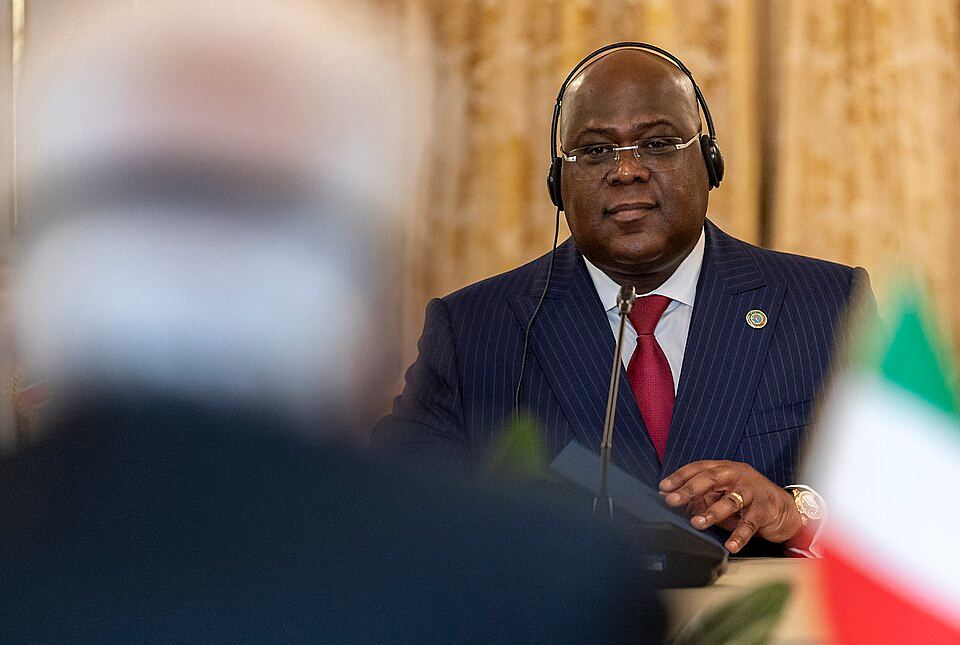
Tshisekedi's sovereignty declaration is primarily performative politics for a domestic audience, the real question is whether the Congolese state can project meaningful authority into the east, where its absence has made sovereignty claims hollow for decades. The Great Lakes crisis has entered a phase where diplomatic language outpaces military reality, and Kinshasa's rhetoric of firmness coexists with an ongoing M23 advance that words alone cannot halt.
President Félix Tshisekedi's declaration that the DRC will "continue to defend with firmness and responsibility its national sovereignty" in the context of the Great Lakes is a statement calibrated for multiple audiences simultaneously: the domestic constituency that demands a strong leader in the face of the M23 advance; the African Union and SADC mediators managing a fragile ceasefire process; and Rwanda, whose relationship with the DRC remains the central axis of the region's instability. Each audience will read the word "firmness" differently.
The Great Lakes crisis has entered a phase where diplomatic language and military reality are significantly diverged. Ceasefire agreements have been signed, broken, and renegotiated in sequence since 2022. The presence of Rwandan forces in eastern DRC, acknowledged in some quarters, denied in others, has made the sovereignty question simultaneously a territorial, political, and diplomatic minefield. Tshisekedi's rhetoric must navigate between appearing too accommodating to external mediation (which carries domestic political cost) and appearing too bellicose (which risks collapsing peace processes that depend on fragile trust).
What "responsibility" adds to the formula is not accidental. The pairing of firmness and responsibility is a response to criticism that the DRC's own internal governance of its eastern territory has been a contributing factor in the instability. Weak state presence, revenue extraction by armed proxies of multiple nationalities, and a history of ineffective FARDC deployments have all been cited as structural preconditions of the M23's advance. Asserting sovereignty without addressing these internal governance failures risks repeating the cycle.
The question the Great Lakes crisis ultimately poses, and that Tshisekedi's statement sidesteps, is what Congolese sovereignty actually looks like in practice in a zone where the state has been effectively absent for thirty years. Sovereignty declared in Kinshasa and sovereignty experienced in Goma are not the same thing, and rebuilding the latter requires a political and institutional project that no presidential communiqué can substitute for.
READ THE SOURCE REPORT FROM ACTUALITE CD →Enjoying Strata-AF™?
Sign in or sign up for a personalised feed and unlock Strata-AF™ Originals.