Ethiopians vote Monday in elections analysts expect Abiy Ahmed's party to win comfortably, with unrest simmering in several regions.
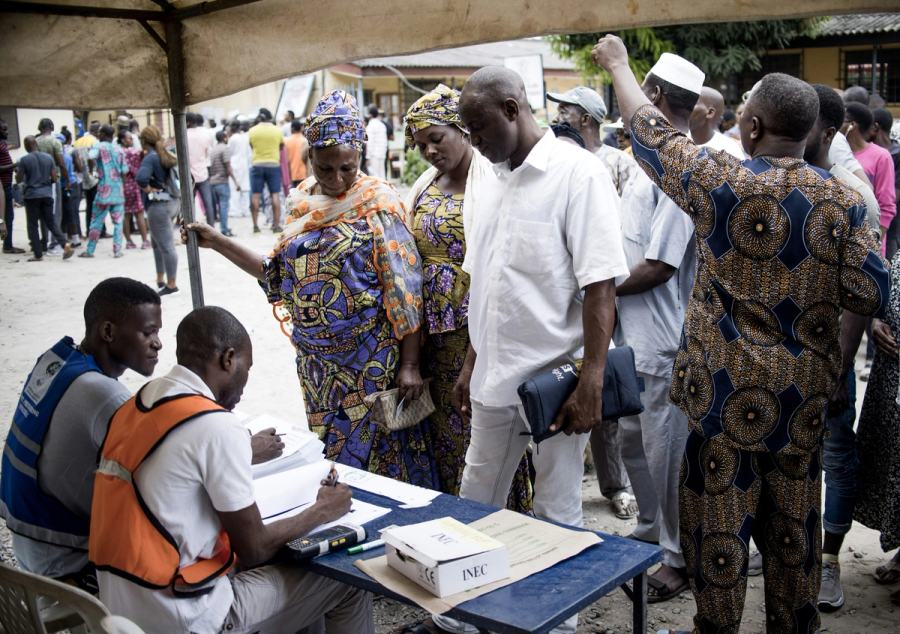
Ethiopia holds parliamentary and regional elections on Monday that analysts expect Prime Minister Abiy Ahmed's party to win by a large margin, despite significant unrest across much of the country.

Ethiopia's elections highlight the tension between democratic legitimacy and political stability across Africa, where dominant parties often consolidate power amid ongoing conflicts. The predictable outcome reflects a broader continental pattern where electoral processes struggle to provide genuine alternatives while managing ethnic tensions and regional instability.
Ethiopia's Electoral Theater and the Continent's Democratic Deficit
Ethiopia's parliamentary and regional elections on Monday represent more than a domestic political exercise. They embody a troubling continental pattern where democratic processes have been reduced to elaborate theatrical performances with predetermined outcomes. While Prime Minister Abiy Ahmed's Prosperity Party marches toward what analysts universally acknowledge as an inevitable victory, the broader implications for African democratic development demand serious examination. The characterization of these elections as having a "foregone conclusion" speaks to a democratic malaise that extends far beyond Ethiopia's borders, touching every corner of our continent where genuine political competition has been systematically eroded.
The timing of these elections, conducted against a backdrop of "significant unrest across much of the country," reveals the fundamental contradiction at the heart of contemporary African governance. How can meaningful democratic participation occur when large swaths of the population are embroiled in conflict, displacement, or fear? Ethiopia's current trajectory mirrors that of numerous African states where elections serve not as instruments of democratic legitimacy but as tools of political validation for existing power structures. The international community's tepid response to these conditions suggests a troubling acceptance of African exceptionalism, a belief that our continent must settle for performative democracy rather than the genuine article.
Abiy Ahmed's transformation from Nobel Peace Prize laureate to an increasingly authoritarian leader illustrates the fragility of democratic progress across Africa. His initial promise of political liberalization and ethnic reconciliation has given way to a governance model that prioritizes consolidation of power over genuine democratic reform. This pattern, initial democratic opening followed by gradual authoritarianism, has become disturbingly familiar across African political landscapes, from Uganda's Yoweri Museveni to Rwanda's Paul Kagame. The international community's continued engagement with these leaders, despite their democratic backsliding, perpetuates a cycle where African citizens are denied the political agency their counterparts elsewhere take for granted.
The concept of "widely seen as a foregone conclusion" in electoral contexts should alarm any serious observer of African politics. When elections become mere formalities rather than competitive contests, they cease to serve their fundamental purpose of providing peaceful mechanisms for political change. This erosion of electoral integrity contributes to the broader crisis of legitimacy facing African institutions, where citizens increasingly view formal political processes as irrelevant to their lived experiences. The result is a dangerous disconnect between governed and governing that historically has led to instability, conflict, and economic stagnation.
Perhaps most concerning is how Ethiopia's electoral charade undermines the broader pan-African project of continental integration and development. How can African states credibly pursue ambitious goals like the African Continental Free Trade Area or continental infrastructure projects when fundamental governance deficits persist? Ethiopia's status as the headquarters of the African Union makes its democratic regression particularly symbolic. It suggests that our continental institutions lack the moral authority to champion democratic governance when their host nation openly abandons democratic principles.
The path forward requires honest acknowledgment that Africa's democratic experiment has stalled in too many places, replaced by hybrid regimes that maintain the aesthetic of democracy while gutting its substance. Ethiopian citizens, like their counterparts across the continent, deserve better than electoral theater. They deserve genuine political competition, transparent governance, and leaders who view power as a temporary stewardship rather than a permanent inheritance. Until African civil society, opposition movements, and international partners begin treating democratic backsliding as the continental emergency it has become, elections like Ethiopia's will continue to mock the very principles they claim to embody, leaving millions of Africans politically disenfranchised in their own nations.
READ THE SOURCE REPORT FROM ALLAFRICA →Enjoying Strata-AF™?
Sign in or sign up for a personalised feed and unlock Strata-AF™ Originals.