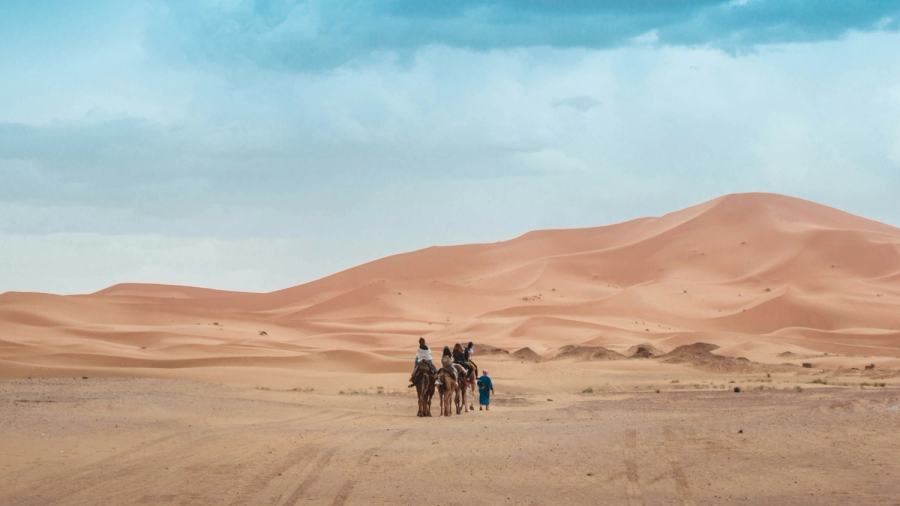
Forty-nine people died of dehydration in a remote part of the Sahara desert in north-west Niger after their transport truck broke down, highlighting the deadly risks of desert migration routes.

This tragedy underscores the desperate conditions driving mass migration across Africa, where people risk their lives on dangerous desert crossings seeking economic opportunities. The incident highlights the urgent need for improved regional infrastructure and migration policies that provide safer, legal pathways for movement across the continent.
The tragic deaths of 49 migrants in Niger's Sahara desert underscore the deadly reality of trans-Saharan migration routes that have become increasingly perilous for those seeking better opportunities across Africa. This incident, while devastating in its human toll, represents just one visible manifestation of a broader continental crisis that demands urgent Pan-African coordination and policy intervention.
Niger's position as a critical transit hub in the Sahara migration corridor places enormous strain on the country's limited resources while exposing migrants to extreme vulnerabilities. The breakdown of basic transportation infrastructure in remote desert regions reflects systemic underdevelopment that affects not just Niger but numerous Sahel nations struggling with inadequate road networks, emergency response capabilities, and border management systems.
The human tragedy points to deeper structural inequalities across the continent that drive desperate migration patterns. When people risk death crossing the world's largest hot desert, it signals profound economic disparities and lack of opportunities in origin communities. This demands a continental approach that addresses root causes through coordinated development policies, intra-African trade facilitation, and investment in rural economies that can provide sustainable livelihoods.
Niger's government faces an impossible balance between humanitarian obligations and pressure from external partners to restrict migration flows. European migration policies that externalize border controls to African nations like Niger create perverse incentives that often push migration into more dangerous routes rather than eliminating it entirely. This dynamic undermines African sovereignty over migration governance while increasing risks for migrants.
The African Union's framework for migration governance must be strengthened to prioritize safe, legal pathways for intra-continental mobility while ensuring adequate support for transit countries. Niger and other Sahel nations require substantial international assistance to develop infrastructure, emergency response capabilities, and economic alternatives that can reduce both the supply and demand factors driving dangerous desert crossings.
This tragedy also highlights the need for enhanced regional early warning systems and emergency response coordination. When transport breaks down in remote Saharan regions, the difference between life and death often depends on rapid rescue operations that require cross-border cooperation, satellite monitoring, and pre-positioned emergency resources that most Sahel governments cannot afford independently.
READ THE SOURCE REPORT FROM ALLAFRICA →Enjoying Strata-AF™?
Sign in or sign up for a personalised feed and unlock Strata-AF™ Originals.