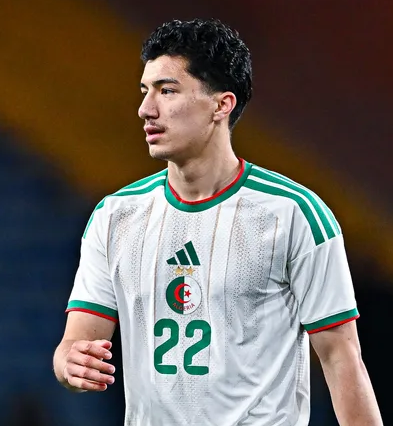
Ibo Maza had his choice of three different countries. Instead of his native Germany, the Bayer Leverkusen forward is representing Algeria, the country of his father, at the World Cup in North America.
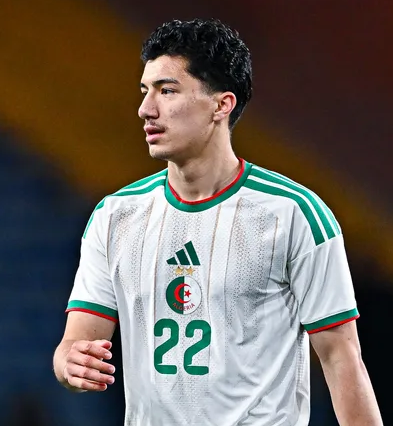
Ibrahim Maza's choice to represent Algeria over Germany at the 2026 World Cup is the latest expression of a structural pattern reshaping African international football: diaspora players developed through European academies, representing the continent of their heritage. This pipeline delivers competitive World Cup squads for Algeria, Morocco, and others while leaving unresolved whether the European development investment is building anything durable in the home football ecosystem or simply harvesting the diaspora's competitive output.
Ibrahim Maza's decision to represent Algeria over Germany, the country of his birth, at the 2026 FIFA World Cup in North America is not only a personal choice; it's a data point in the accelerating reordering of international football's talent pipeline. The continent's young players, increasingly embedded in European youth academies from age 12 or 14, are navigating complex identity claims: citizenship from ancestry, the pull of a nation that gave them opportunity, and the competitive calculation of where they are most likely to reach a major tournament.
For Algeria specifically, Maza's inclusion represents a deliberate construction of a squad that draws from its diaspora across three continents. Alongside veterans like Riyad Mahrez, the national team has become a mirror of Algeria's post-colonial migration history, France, Germany, the UK, and the Gulf producing players who carry dual attachments. This is not exceptional; Morocco's 2022 World Cup semi-final run was built on a similar model. But it raises questions about what international football is measuring when it measures national identity.
The deeper structural story is about Africa's talent drain and its partial repatriation in the form of continental representation. Maza was developed at Bayer Leverkusen, one of the best clubs in Europe in recent years, using infrastructure, coaching, and sports science that his country of heritage could not have provided. The national team then benefits from that investment without contributing to it. That's not an accusation; it's an honest description of how the current system works, and it will continue working this way as long as elite football development is overwhelmingly concentrated in half a dozen European leagues.
What's unresolved is whether this pipeline is building anything durable back in Algeria, or whether it functions primarily as a feel-good dividend of the diaspora while domestic football infrastructure remains chronically underfunded. The players are real. Whether the systems that would produce the next generation at home are also being built. That question is still open.
READ THE SOURCE REPORT FROM DW →Enjoying Strata-AF™?
Sign in or sign up for a personalised feed and unlock Strata-AF™ Originals.