Africa's AI credit boom is outpacing its accountability architecture, and without explainability mandates, the continent risks encoding old exclusions into new mathematics.
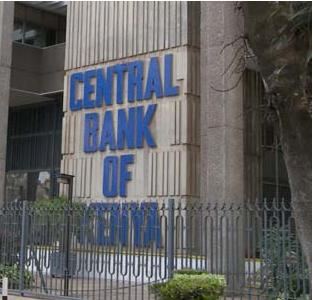
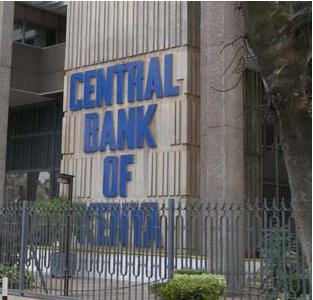
Nairobi's mobile money agents, not head-office compliance teams, are where a denied loan actually gets explained to a borrower, and right now agents know no more about the algorithm's logic than the borrower does. Copying the EU's disclosure playbook without funding equivalent supervisory technology inside the Central Bank of Kenya and the Central Bank of Nigeria just shifts liability onto agents who can't answer the question borrowers are actually asking.
Across Kenya, Nigeria, Ghana, and beyond, fintechs are deploying proprietary machine-learning models to make lending decisions in seconds but borrowers denied credit have no legal right to a coherent explanation, and regulators lack the technical capacity to audit the models they nominally oversee. The opacity is structural: lenders treat model weights as trade secrets while low income borrowers bear all the downside risk of algorithmic error.
The continental stakes are acute precisely because financial inclusion is a development priority, not merely a market opportunity. If opaque AI systematically redlines smallholder farmers, women traders, or migrants replicating historical biases in new form, the inclusion narrative collapses while institutions still collect origination fees. The EU's AI Act and emerging frameworks in the US offer templates, but African regulators must adapt them to data sparse, mobile money native contexts rather than copy & paste.
Watch the Central Bank of Nigeria's consumer protection directorate and Kenya's Central Bank for any movement toward algorithmic accountability guidelines; also whether civil society litigants begin testing existing consumer finance law against AI-denial decisions, which could force disclosure faster than legislation.
READ THE SOURCE REPORT FROM TECHCABAL →Enjoying Strata-AF™?
Sign in or sign up for a personalised feed and unlock Strata-AF™ Originals.