--:--LAGOS
CultureMusicFilmTechSportsPoliticsHealthFinanceReligionFashion
fashion★ STRATA-AF™ ORIGINAL
African Fashion's Infrastructure Revolution

African designers didn't wait for a cover — they built storefronts, supply chains, and diaspora distribution networks. The gatekeepers missed the construction.
Pan-African2 MIN
LISTEN TO STRATA-AF™ NOTE
Share
African Fashion's Infrastructure Revolution
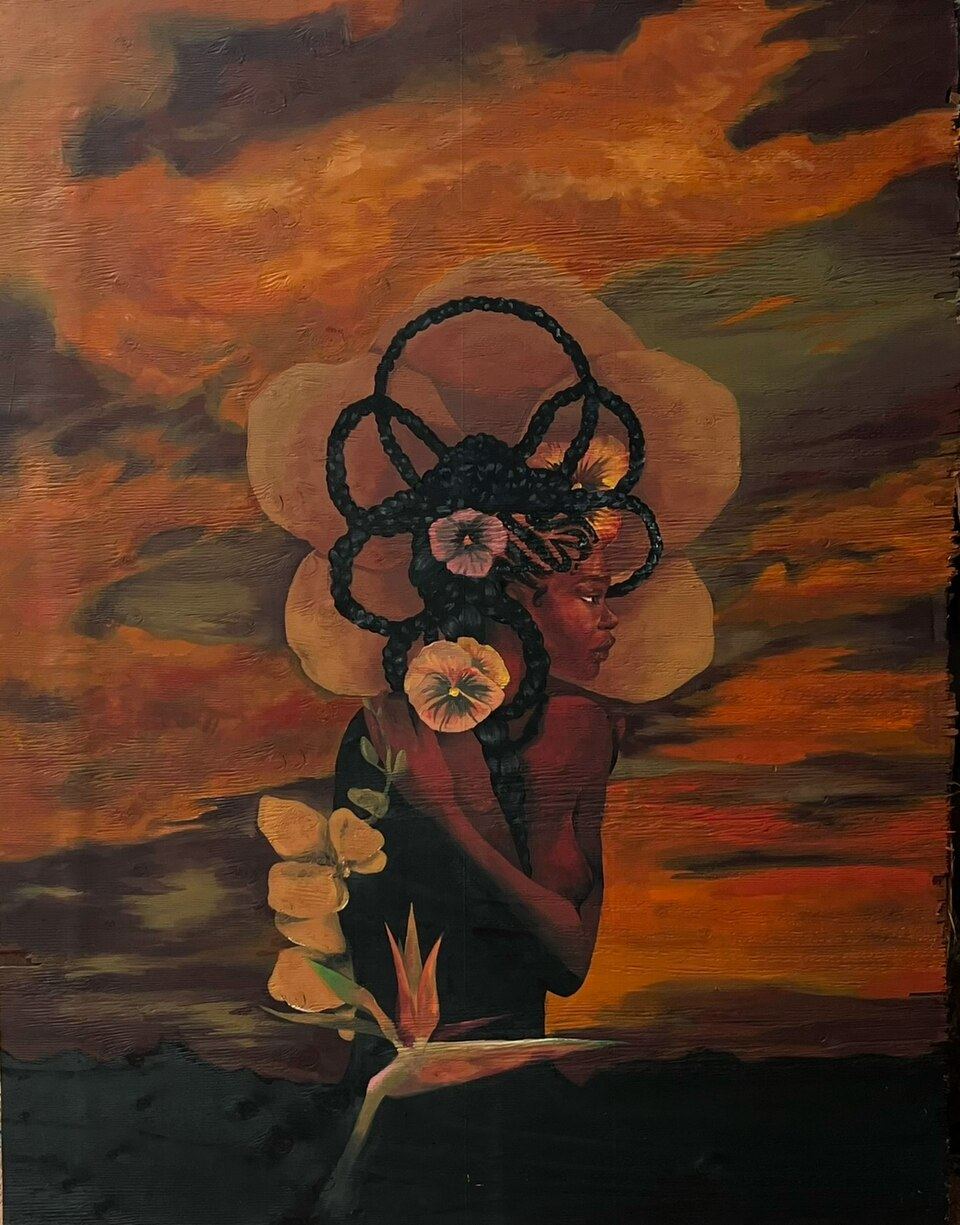
IMAGE · Artistdatabase749 · CC BY 4.0 · Wikimedia Commons

There is a construction happening in plain sight, and it does not look like a runway. It looks like a Shopify backend in Accra, a WhatsApp broadcast list in Johannesburg, a pop-up in Brixton coordinated through a Lagos DM thread. African fashion's most consequential shift in a generation is not a collection. It is infrastructure, unglamorous, load bearing and entirely outside the editorial calendar of any legacy Western publication.

The parallel to what is happening across other African creative and economic sectors is not coincidental. Across the continent's investment landscape, the most durable wealth is being built not through spectacle but through what works: beverage cans, seed storage, the boring arteries of a functioning economy [1]. Fashion's version of this is the independent digital storefront, the direct to diaspora drop, the designer who has quietly built a customer base of 40,000 across London, Toronto, and Atlanta without a single glossy feature. The mechanism is different. The logic is identical.

Understanding why this moment arrived now requires sitting with an uncomfortable truth about how African creative industries have historically been organised. For decades, the validation loop ran outward — Lagos to London, Accra to Paris, Nairobi to New York with Western editorial and retail gatekeepers determining which African aesthetics were legible, marketable, and therefore real [2]. That loop has not disappeared but a parallel loop has been constructed, one that runs Lagos to the diaspora directly, that prices in Naira and delivers to Peckham, that does not require a stylist at a major title to call something "the new cool."

What accelerated this? Partially the music ecosystem, which ran the same experiment several years earlier and documented the results publicly. Ghana's hip hop scene, South Africa's electronic producers and the broader Afrobeats infrastructure demonstrated that homegrown distribution — streaming, social, direct fan relationship could generate both cultural weight and commercial return without waiting for Western co-signing [3].

Fashion designers watched that happen and drew the obvious lesson. If Burna Boy could go from Alaba International Market to a Grammy without a major international label structuring the journey, a Lagos based ready to wear label could reach a 28 year-old Nigerian British professional in East London without Vogue UK commissioning a trend piece.

Tems's recent British Vogue appearance crystallises the dynamic with uncomfortable precision [5]. The cover is real & the platform is large but read the interview closely and the power geometry has inverted. She is not there to receive legitimacy, she is there because the publication needs what she represents– the validation, as she makes clear, always ran the other way.

STRATA-AF™

Keep reading this Original

Sign in or sign up to finish this story, get your personalised feed, and unlock every Strata-AF™ Original.

SIGN IN / SIGN UP
READ NEXT
African Fashion's Confidence Crisis: When Excellence Isn't Enough
FASHIONSTRATA-AF™ ORIGINAL
African Fashion's Confidence Crisis: When Excellence Isn't Enough
Lagos, Nigeria5 MINREAD →
The Women Who Gathered in Nairobi to Talk Ownership, Not Just Opportunity
FASHIONBellaNaija
The Women Who Gathered in Nairobi to Talk Ownership, Not Just Opportunity
Lagos, Nigeria2 MINREAD →
--:--LAGOS
STRATA-AF™
ISSUE 001FEED◎ SEARCHSUBSCRIBE
/shows/data/docs
fashion★ STRATA-AF™ ORIGINAL
African Fashion's Infrastructure Revolution
IMAGE · Artistdatabase749 · CC BY 4.0 · Wikimedia Commons
African Fashion's Infrastructure Revolution

African designers didn't wait for a cover — they built storefronts, supply chains, and diaspora distribution networks. The gatekeepers missed the construction.

Pan-African2 MIN READ
LISTEN TO STRATA-AF™ NOTE
Share

There is a construction happening in plain sight, and it does not look like a runway. It looks like a Shopify backend in Accra, a WhatsApp broadcast list in Johannesburg, a pop-up in Brixton coordinated through a Lagos DM thread. African fashion's most consequential shift in a generation is not a collection. It is infrastructure, unglamorous, load bearing and entirely outside the editorial calendar of any legacy Western publication.

The parallel to what is happening across other African creative and economic sectors is not coincidental. Across the continent's investment landscape, the most durable wealth is being built not through spectacle but through what works: beverage cans, seed storage, the boring arteries of a functioning economy [1]. Fashion's version of this is the independent digital storefront, the direct to diaspora drop, the designer who has quietly built a customer base of 40,000 across London, Toronto, and Atlanta without a single glossy feature. The mechanism is different. The logic is identical.

Understanding why this moment arrived now requires sitting with an uncomfortable truth about how African creative industries have historically been organised. For decades, the validation loop ran outward — Lagos to London, Accra to Paris, Nairobi to New York with Western editorial and retail gatekeepers determining which African aesthetics were legible, marketable, and therefore real [2]. That loop has not disappeared but a parallel loop has been constructed, one that runs Lagos to the diaspora directly, that prices in Naira and delivers to Peckham, that does not require a stylist at a major title to call something "the new cool."

What accelerated this? Partially the music ecosystem, which ran the same experiment several years earlier and documented the results publicly. Ghana's hip hop scene, South Africa's electronic producers and the broader Afrobeats infrastructure demonstrated that homegrown distribution — streaming, social, direct fan relationship could generate both cultural weight and commercial return without waiting for Western co-signing [3].

Fashion designers watched that happen and drew the obvious lesson. If Burna Boy could go from Alaba International Market to a Grammy without a major international label structuring the journey, a Lagos based ready to wear label could reach a 28 year-old Nigerian British professional in East London without Vogue UK commissioning a trend piece.

Tems's recent British Vogue appearance crystallises the dynamic with uncomfortable precision [5]. The cover is real & the platform is large but read the interview closely and the power geometry has inverted. She is not there to receive legitimacy, she is there because the publication needs what she represents– the validation, as she makes clear, always ran the other way.

STRATA-AF™

Keep reading this Original

Sign in or sign up to finish this story, get your personalised feed, and unlock every Strata-AF™ Original.

SIGN IN / SIGN UP
VERTICAL
fashion
ORIGIN
Pan-African
READ NEXT2 PIECES SELECTED BY OUR EDITORS
FASHION
African Fashion's Confidence Crisis: When Excellence Isn't Enough
From Lagos ateliers losing brides to European houses to Nollywood stars rejecting Western validation, African fashion is caught between celebrating its brilliance and confronting why that brilliance still isn't trusted at home.
Lagos, Nigeria5 MINREAD →
FASHION
The Women Who Gathered in Nairobi to Talk Ownership, Not Just Opportunity
The Africa Soft Power Summit in Nairobi marked a shift from traditional development discourse toward conversations about African ownership and economic self-determination. The gathering featured data-driven discussions that reframed how the continent's economic future is being conceptualized.
Lagos, Nigeria2 MINREAD →
CULTURE · MUSIC · FILM · TECH · SPORT · POLITICS · HEALTH · FINANCE · RELIGION · FASHION · LAGOS · NAIROBI · JOBURG · ACCRA · DATA JOURNALISM · ORIGINAL REPORTING · THE ACTUAL VERSION ·CULTURE · MUSIC · FILM · TECH · SPORT · POLITICS · HEALTH · FINANCE · RELIGION · FASHION · LAGOS · NAIROBI · JOBURG · ACCRA · DATA JOURNALISM · ORIGINAL REPORTING · THE ACTUAL VERSION ·
Premium editorial for a continent that's done waiting to be covered.

Not the export-market version. Not the diaspora version. The actual version — written by the people who live there.

Verticals
CultureMusicFilmTechSportsPolitics
HUBS
Strata-AF OriginalsDataDocsNewsletterArchiveShows
Company
AboutMissionManifestoLegal
REACH
10VERTICALS
6CONTENT TYPES
5CITIES
1STANDARD
© 2026 STRATA-AF™ · STRATA PUBLISHING CO LTD · LAGOS · JOBURG · NAIROBI · ACCRAPRIVACYTERMSMASTHEAD
 
 
--:--LAGOS
CultureMusicFilmTechSportsPoliticsHealthFinanceReligionFashion
Highlights
Strata-AF
Editor's Pick
From the web
FASHIONFROM THE WEB★ EDITOR'S PICK
African Fashion's Infrastructure Revolution
African designers didn't wait for a cover — they built storefronts, supply chains, and diaspora distribution networks. The gatekeepers missed the construction.
Pan-African2 MINREAD →
RELIGIONFROM THE WEB★ EDITOR'S PICK
How African Megachurches Became Continental Media Empires
From RCCG's YouTube dominance to Ethiopia's evangelical broadcast networks, African megachurches are operating the continent's most powerful and least scrutinised media infrastructure — operating outside broadcast regulators, advertising standards bodies, and any meaningful accountability.
Pan-African2 MINREAD →
TECHFROM THE WEB★ EDITOR'S PICK
Regulate, Retreat, Repeat: Who Really Controls Nigeria's Digital Economy ?
Nigeria just launched its boldest regulatory strike yet against Big Tech but the history of African internet governance says the bolder the move, the faster the backslide. Here's why this time might actually be different, and why it probably isn't.
Pan-African2 MINREAD →
HEALTHFROM THE WEBSTRATA-AF™ ORIGINAL
Africa's Cervical Cancer Crisis Behind the Headlines
HPV vaccine programmes across sub Saharan Africa are running at under 50% coverage in several countries, leaving millions of girls unprotected against a cancer that kills more African women than almost any other and the gap is quietly widening.
Pan-African2 MINREAD →
HEALTHFROM THE WEB
African countries chart path for safe use of emerging genetic technologies in disease control
African health ministries are moving from bystander to rule setter on gene drives and GMO vectors, negotiating biosafety frameworks before Northern donors deploy the tools rather than after.
Pan-African1 MIN · WHO Africa · 13 JUL
TECHFROM THE WEB★ EDITOR'S PICK
Govt Suspends Enforcement of New Internet Platform, Digital Economy Regulations
Suspending its sweeping digital economy rules before enforcement even begins signals that regulatory overreach spooked enough stakeholders to force a retreat but the underlying ambition to tax and police platforms has not disappeared.
Nigeria1 MIN · AllAfrica ICT · 13 JULREAD →
FINANCEFROM THE WEB★ EDITOR'S PICK
Egypt’s Petroleum Minister reviews strategic gas project in Jordan
Egypt deploying its petroleum-sector companies to build gas infrastructure in Jordan is quiet but significant — Cairo is monetising technical capacity regionally, reframing itself as an energy-services exporter, not just a transit corridor.
Egypt1 MIN · Egypt Independent · 13 JULREAD →
POLITICSFROM THE WEB
Benue, Plateau Communities Hit By Fresh Attacks, 27 Killed
Renewed attacks across Benue and Plateau confirm that Nigeria's Middle Belt violence has neither been contained nor seriously addressed, it is a slow burning emergency normalised into background noise.
Nigeria1 MIN · AllAfrica Latest · 13 JUL
SPORTSFROM THE WEB
Senegal sack manager Thiaw in wake of World Cup exit
Thiaw's dismissal after a group stage exit reflects the structural impatience of African football federations: coaches absorb the cost of systemic underinvestment in a single tournament cycle.
Senegal1 MIN · BBC News Africa · 12 JUL
SPORTSFROM THE WEB★ EDITOR'S PICK
Wanyonyi breaks 1,000m world record on debut in Monaco
Wanyonyi's 1,000m world record is not just athletic excellence, it is further evidence that Kenya's middle distance pipeline remains the world's deepest, even as the country's athletics governance faces persistent doping scrutiny.
Kenya1 MIN · BBC News Africa · 10 JULREAD →
See all stories

The actual version — written by the people who live there.

10VERTICALS
6TYPES
5CITIES
1STANDARD
AboutMissionManifestoLegalOriginalsSubscribeArchiveShowsContributorsJobs
© 2026 STRATA-AF™ · STRATA PUBLISHING CO LTD · LAGOS · NAIROBI · JOBURG · ACCRA
 
 
--:--LAGOS
CultureMusicFilmTechSportsPoliticsHealthFinanceReligionFashion
fashion★ STRATA-AF™ ORIGINAL
African Fashion's Infrastructure Revolution

African designers didn't wait for a cover — they built storefronts, supply chains, and diaspora distribution networks. The gatekeepers missed the construction.

Pan-African2 MIN
LISTEN TO STRATA-AF™ NOTE
Share
African Fashion's Infrastructure Revolution

There is a construction happening in plain sight, and it does not look like a runway. It looks like a Shopify backend in Accra, a WhatsApp broadcast list in Johannesburg, a pop-up in Brixton coordinated through a Lagos DM thread. African fashion's most consequential shift in a generation is not a collection. It is infrastructure, unglamorous, load bearing and entirely outside the editorial calendar of any legacy Western publication.

The parallel to what is happening across other African creative and economic sectors is not coincidental. Across the continent's investment landscape, the most durable wealth is being built not through spectacle but through what works: beverage cans, seed storage, the boring arteries of a functioning economy [1]. Fashion's version of this is the independent digital storefront, the direct to diaspora drop, the designer who has quietly built a customer base of 40,000 across London, Toronto, and Atlanta without a single glossy feature. The mechanism is different. The logic is identical.

Understanding why this moment arrived now requires sitting with an uncomfortable truth about how African creative industries have historically been organised. For decades, the validation loop ran outward — Lagos to London, Accra to Paris, Nairobi to New York with Western editorial and retail gatekeepers determining which African aesthetics were legible, marketable, and therefore real [2]. That loop has not disappeared but a parallel loop has been constructed, one that runs Lagos to the diaspora directly, that prices in Naira and delivers to Peckham, that does not require a stylist at a major title to call something "the new cool."

What accelerated this? Partially the music ecosystem, which ran the same experiment several years earlier and documented the results publicly. Ghana's hip hop scene, South Africa's electronic producers and the broader Afrobeats infrastructure demonstrated that homegrown distribution — streaming, social, direct fan relationship could generate both cultural weight and commercial return without waiting for Western co-signing [3].

Fashion designers watched that happen and drew the obvious lesson. If Burna Boy could go from Alaba International Market to a Grammy without a major international label structuring the journey, a Lagos based ready to wear label could reach a 28 year-old Nigerian British professional in East London without Vogue UK commissioning a trend piece.

Tems's recent British Vogue appearance crystallises the dynamic with uncomfortable precision [5]. The cover is real & the platform is large but read the interview closely and the power geometry has inverted. She is not there to receive legitimacy, she is there because the publication needs what she represents– the validation, as she makes clear, always ran the other way.

STRATA-AF™

Keep reading this Original

Sign in or sign up to finish this story, get your personalised feed, and unlock every Strata-AF™ Original.

SIGN IN / SIGN UP

READ NEXT
--:--LAGOS
/shows/data/docs
fashion★ STRATA-AF™ ORIGINAL
African Fashion's Infrastructure Revolution
IMAGE · Artistdatabase749 · CC BY 4.0 · Wikimedia Commons
African Fashion's Infrastructure Revolution

African designers didn't wait for a cover — they built storefronts, supply chains, and diaspora distribution networks. The gatekeepers missed the construction.

Pan-African2 MIN READ
LISTEN TO STRATA-AF™ NOTE
Share

There is a construction happening in plain sight, and it does not look like a runway. It looks like a Shopify backend in Accra, a WhatsApp broadcast list in Johannesburg, a pop-up in Brixton coordinated through a Lagos DM thread. African fashion's most consequential shift in a generation is not a collection. It is infrastructure, unglamorous, load bearing and entirely outside the editorial calendar of any legacy Western publication.

The parallel to what is happening across other African creative and economic sectors is not coincidental. Across the continent's investment landscape, the most durable wealth is being built not through spectacle but through what works: beverage cans, seed storage, the boring arteries of a functioning economy [1]. Fashion's version of this is the independent digital storefront, the direct to diaspora drop, the designer who has quietly built a customer base of 40,000 across London, Toronto, and Atlanta without a single glossy feature. The mechanism is different. The logic is identical.

Understanding why this moment arrived now requires sitting with an uncomfortable truth about how African creative industries have historically been organised. For decades, the validation loop ran outward — Lagos to London, Accra to Paris, Nairobi to New York with Western editorial and retail gatekeepers determining which African aesthetics were legible, marketable, and therefore real [2]. That loop has not disappeared but a parallel loop has been constructed, one that runs Lagos to the diaspora directly, that prices in Naira and delivers to Peckham, that does not require a stylist at a major title to call something "the new cool."

What accelerated this? Partially the music ecosystem, which ran the same experiment several years earlier and documented the results publicly. Ghana's hip hop scene, South Africa's electronic producers and the broader Afrobeats infrastructure demonstrated that homegrown distribution — streaming, social, direct fan relationship could generate both cultural weight and commercial return without waiting for Western co-signing [3].

Fashion designers watched that happen and drew the obvious lesson. If Burna Boy could go from Alaba International Market to a Grammy without a major international label structuring the journey, a Lagos based ready to wear label could reach a 28 year-old Nigerian British professional in East London without Vogue UK commissioning a trend piece.

Tems's recent British Vogue appearance crystallises the dynamic with uncomfortable precision [5]. The cover is real & the platform is large but read the interview closely and the power geometry has inverted. She is not there to receive legitimacy, she is there because the publication needs what she represents– the validation, as she makes clear, always ran the other way.

STRATA-AF™

Keep reading this Original

Sign in or sign up to finish this story, get your personalised feed, and unlock every Strata-AF™ Original.

SIGN IN / SIGN UP
VERTICAL
fashion
ORIGIN
Pan-African
READ NEXT2 PIECES SELECTED BY OUR EDITORS
CULTURE · MUSIC · FILM · TECH · SPORT · POLITICS · HEALTH · FINANCE · RELIGION · FASHION · LAGOS · NAIROBI · JOBURG · ACCRA · DATA JOURNALISM · ORIGINAL REPORTING · THE ACTUAL VERSION ·CULTURE · MUSIC · FILM · TECH · SPORT · POLITICS · HEALTH · FINANCE · RELIGION · FASHION · LAGOS · NAIROBI · JOBURG · ACCRA · DATA JOURNALISM · ORIGINAL REPORTING · THE ACTUAL VERSION ·
Premium editorial for a continent that's done waiting to be covered.

Not the export-market version. Not the diaspora version. The actual version — written by the people who live there.

Verticals
CultureMusicFilmTechSportsPolitics
HUBS
Strata-AF OriginalsDataDocsNewsletterArchiveShows
Company
AboutMissionManifestoLegal
REACH
10VERTICALS
6CONTENT TYPES
5CITIES
1STANDARD
© 2026 STRATA-AF™ · STRATA PUBLISHING CO LTD · LAGOS · JOBURG · NAIROBI · ACCRAPRIVACYTERMSMASTHEAD